


What are the CAAMCI programme’s objectives?
Lavera Alexander CAAMCI is positioned to establish California’s first FAA-compliant, multi-airport flight network, connecting the rural public airports of Watsonville, Marina, Salinas, and Hollister, to create a coordinated system of flight. The project focuses on infrastructure and community readiness. CAAMCI sits in the middle of an ecosystem that has been evolving for many years. Each of these public-use airports already has at least one OEM using their facilities and all of them are heavily engaged in advanced air mobility. We’re investing in critical infrastructure and making sure that the community understands how they can benefit from AAM.
What does developing this network involve?
Lavera Alexander CAAMCI’s role has been to start building out the infrastructure that will take these separate activities and bring them together so testing is enhanced and we can see from the use cases what’s in it for the community. As the OEMs continue on their journey toward certification and commercialization, this coordinated system will help address the problems that the community had already identified in our planning documents. We want to learn from each other and create a system that could scale across California, maybe not immediately, but in time, connecting all our public-use airports. I think in California, we have something like 200 to 300 plus, public-use general aviation airports.
One of the issues is that Joby and Archer use completely different charging systems.
Lavera Alexander The charging stations may be one of the easiest challenges we need to solve. Worst case scenario, you simply would have two charging stations at each airport. The first phase of CAAMCI, which meets the requirements of the state, will be completed in January 2028. So we will have this built and ready to scale to other spaces across the state so other airports can join the network quickly.
The airports and OEMs are discussing a universal charger that will support them as well as other OEMs that may want to come into the region and use CAAMCI.
Infrastructure is always going to follow behind technology so we know we are going to play catch-up in many ways. In comparison to large commercial airports, rural public-use airports are often seen as supporting characters in aviation. However, in advanced air, many of them are the star of the show because they are being utilized and supported by OEMs on their journey to commercialization.
When it comes to infrastructure, we’ve been taking inventory of what’s present as well as the gaps – such as sensors and other parts of communications systems needed – so that different aircraft that enter the airspace can hopefully fly and play better together. We are also making sure that, as we build out CAAMCI, the community is weighing in and having a voice in this space.
What are the major equipment gaps you have found?
Lavera Alexander We need to ensure we are connecting these airports. There are lots of vendors offering different systems but we’re being very careful about which ones we’re selecting. We know that the sensors, vertiports and charging stations are important but comprehensive communications systems are going to be key.
So the outcome of all this work is going to be a set of standards, a common approach among all the airports that you’re working with.
Lavera Alexander Exactly. We are developing resources, including a toolkit, which we hope to share with others who are interested in participating in advanced aviation. Every airport is different. As use cases continue to be defined, there are some airports that may be focused solely on agriculture and others on air taxis. We want to make sure that whatever CAAMCI can do on the Central Coast can eventually be shared with others.
Have you researched the costs of developing operational vertiports?
Lavera Alexander We are thinking through that space with airports now – what we can cover and what other funding sources may be available. We know that through the federal programme there are other pots of funding that are going to probably be available to those who are engaging in advanced air mobility. Rural public-use airports in the USA are not as upgraded as some may think – there are hangars and runways in need of repair and infrastructure that needs to be added. Each airport is different. With CAAMCI, we need to make sure the money invested aligns with the data and supports what is needed to participate in a coordinated system of flight.
We do have a list of the things that are available that we know are being used in different places and have been used on the Central Coast – but that list is only going to work if it’s paired correctly with the needs of a particular facility. I think that’s one of the reasons the Central Coast has been successful in building out the ecosystem is that everything is attached to in-depth strategic regional planning. The state gave us money for implementation because we did the necessary planning with regional partners.

Lavera Alexander
How have you ensured the community engagement work you have developed reflects the real hopes and fears of communities?
Lavera Alexander That’s something that MBEP has a long history of doing. We’ve been around for 10 years. As a regional convener, we bring communities together to have the conversations needed to inform the work. Regions Rise Together and Uplift Central Coast are two examples of MBEP working across Santa Cruz, Monterey, and San Benito to capture the needs, aspirations, and concerns of diverse communities within the Central Coast. There are a lot of myths around AAM that people get excited about. The aircraft are beautiful and brilliant, but I often caution community members: “Don’t focus on the aircraft, focus on what it’s supposed to do for you.” What is the use case attached to that aircraft? And as aircraft continue to move through certification, hold the sector accountable so that it delivers tangible public benefit to the community. MBEP doesn’t simply advance economic development, we are champions of inclusive economic development, which means that we invite the community to the table from the beginning, alongside other stakeholders, to advocate for what it wants and what it needs.
Can you give me some examples of where the potential operators have had to rethink their planning following community engagement?
Lavera Alexander One concern of communities has been the potential cost of air taxis. Media reports have indicated that Archer and other OEMs may be able to offer fares that are similar to Uber Black. That’s important for the community to read and know that AAM industry leaders hear and respond to their questions and concerns. In addition, there are community forums and other forms of outreach being conducted by OEMs to ensure they are aware of community concerns.
Will these airports make money out AAM?
Lavera Alexander They are already hosting OEMs, so the revenue streams exist. They have partnership agreements with some of these OEMs who are paying to be at these airports. So it’s not so much about will the OEMs provide revenue but more about broadening the space so the revenue stream is diverse. Can we use the infrastructure that we’re building to think about other avenues of revenue generation? The next phase of work will focus on the CAAMCI marketplace, which will help airports continue to diversify revenue streams. Since CAAMCI partners with cities as well as airports, we will continue to work with partners to identify diverse funding opportunities, including those outside aviation, to bring in investments needed to grow AAM/UAS efforts at the airports.
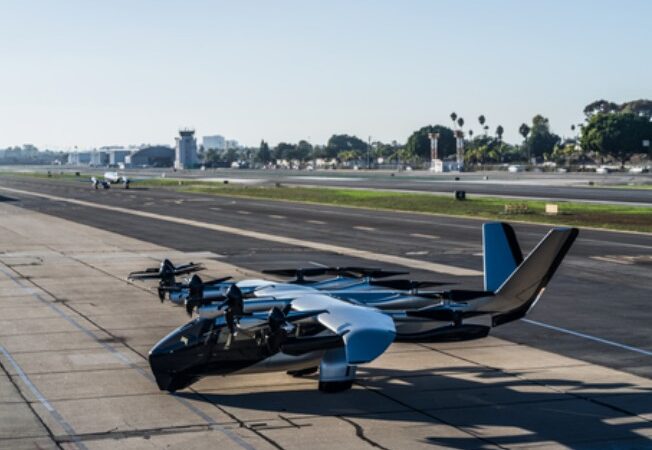
(Main image: Hawthorne Airport – Archer Aviation)