


Spending on counter-UAS systems (C-UAS) by governments around the world between January and September 2026 has reached over USD53 billion in publicly announced contracts, with levels of spending likely to increase over the last three months of the year, according to the September 2026 edition of the Unmanned Airspace Counter-UAS Directory, published today.
“The drone war in Ukraine has not just led to a major overhaul of defence budget priorities worldwide it has also radically changed the way in which new defence systems are purchased,” said Philip Butterworth-Hayes, editor of the Directory.
Support to Ukraine’s C-UAS industry accounts for the largest segment of this expenditure. In July the European Commission and Ukraine signed a new defence industrial partnership and the Commission disbursed a further EUR 1 billion to support Ukraine’s drone capabilities under the EUR90 billion Ukraine Support Loan. In parallel the Commission released a further EUR3.9 billion as the first payment under the first tranche of around EUR6 billion dedicated to drone procurement – including interceptor drones. Meanwhile partner countries within the Prioritised Ukraine Requirements List (PURL) programme – a NATO initiative launched in July 2025 enabling allies to fund the purchase of US-made weapons and ammunition for Ukraine – in February 2026 announced one of the largest support budgets for Ukraine, totalling USD38 billion for 2026, with USD2 billion allocated to air defence. Germany said it will fund an anti-drone shield over Ukrainian cities, as well as drone assault units, as part of its USD13 billion budget for assistance to Ukraine. Norway and the UK are contributing approximately USD700 million each to air defence, with other countries, such as Turkiye, also providing dedicated air defence assistance.
Urgent operational requirements among Arab Gulf states have also led to significant purchases of C-UAS systems. Ukrainian successes in bringing down Russian-adapted Shahed drones has meant that Ukraine will have a long-term industrial air defence presence among these states as they partner to pursue counter-drone capabilities, military training and industrial partnerships including research and production.
The war in Ukraine and the Gulf has generated a huge upsurge in bolstering national air defences against drone attacks.
In March 2026 the US Army awarded Anduril Industries a firm-fixed-price contract with a cumulative total of USD20 billion of for the ten-year supply of C-UAS systems, including the proprietary, open-architecture, AI-enabled Lattice suite, integrated hardware, data, computer infrastructure, and technical support services. The second largest publicly recorded C-UAS contract was Poland’s SAN CUAS Programme, worth USD4.2 billion, which awarded to a consortium of Kongsberg Defence & Aerospace and Polska Grupa Zbrojeniowa (PGZ) to provide a “drone wall shield” on the country’s eastern border. In July 2026 Belgium and the Netherlands announce a joint EUR3.1-billion purchase of layered air defence systems, including ammunition, at NATO’s annual summit in Ankara. NATO Allies at the event announce that over 40 billion USD will be invested in counter-drone capabilities over the next five years.
Around the world military drone and C-UAS marketplaces have been launched, to incentivize small and medium sized enterprises in developing new capabilities and ensuring these capabilities reach the front-line in months, rather than years. In July Ukraine’s defence ministry announced the Ukrainian Brave1 procurement programme and NATO have opened applications for their first joint innovation programme, UNITE – Brave NATO, with funding of up to EUR250,000 or EUR500,000 per partner will be available for joint projects. The European Commission has also launched the EU-Ukraine Drone Alliance. “The Alliance will help the EU and Ukraine work more closely on developing and using drones and systems to stop hostile drones,” said the Commission. “It is part of wider EU efforts to strengthen Europe’s defence in this fast-changing area. The Alliance brings together companies, start-ups, researchers, armed forces and other users from EU countries and Ukraine. Its main goal is to help improve the security of both the EU and Ukraine by supporting a strong drone industry, encouraging the development of new drone and counter-drone technologies, and helping build Europe’s overall capacity in this area.” The first meeting of the Alliance is due to take place in September 2026 In the USA, the US Joint Interagency Task Force 401 (JIATF-401), is developing its counter-unmanned aerial system (C-UAS) marketplace to improve how military organisations, domestic law enforcement agencies and international allies and partners identify, evaluate and acquire validated counter-drone technologies.
C-UAS military innovations
Since the Russian invasion of Ukraine in 2022, drone warfare has evolved through six stages as both Ukraine and Russia have sought to develop a decisive technical edge. In the past, one side has occasionally been able to field an innovative technology which gives them an edge for a few months before it is mitigated. But in July this year this trend has been halted. Ukraine’s adoption of AI and autonomous warfare systems has given the country a strategic advantage which Russia will find hard to counter, especially when allied to the huge production volumes of interceptors which are now being built in Europe.
In August, Ukraine’s Ministry of Defence says more than 70 systems using artificial intelligence and computer vision are now being used by its defence forces, including technologies for detecting and identifying aerial targets. More than 200 Ukrainian companies are producing AI-enabled drones, while the government’s Brave1 Market currently lists 46 AI solutions, including target recognition and optical stabilisation technologies. AI-enabled systems are being developed to maintain awareness of aerial threats in environments affected by electronic warfare – so even though Russia has evolved its Geran attack drones to fly faster, further and higher than ever before, the rapid introduction of autonomy for integrated detection, classification and mitigation has allowed Ukraine to respond to these evolving threats.
According to Ukraine’s president Volodymyr Zelenskyy speaking in April 2026: “For the first time in the history of this war, an enemy position was taken exclusively by unmanned platforms – ground systems and drones. The occupiers surrendered, and the operation was carried out without infantry and without losses on our side.”
Cheap, reliable and effective interceptor drones are now the first line of defence against Gerans. In the first three months of 2026, over 30 new types of C-UAS interceptors were launched, with increasing performance capabilities. The Unmanned Airspace C-UAS Directory September 2026 edition now lists 100 interceptor manufacturers and their products. The range and capabilities of new types of interceptors have evolved at an unprecedented rate. At the 2026 Farnborough Air Show Destinus, headquartered in the Netherlands, exhibited its Vorexon, a concept-stage Mach 2 ground-based interceptor while X-Bow Systems launched its Buckler, an interceptor designed to defeat Group 3 drones at supersonic speeds. The system is priced under USD100,000.
C-UAS civil innovations
During the 2026 FIFA World Cup across the 11 US host cities, authorities seized over 700 unauthorised drones operating in restricted airspace. For owners of civil infrastructure, the rogue drone issue is slightly different from the challenge facing military colleagues. Detection is less of a challenge (most rogue drones can be detected via their RF signals) but stopping a drone from flying over a stadium or an airport is institutionally and technically challenging, especially when budgets are limited. In July the US Department of Homeland Security and Department of Justice published an interim final rule which has allowed local authorities to conduct training and certification of counter-UAS system operations at a more local level. The World Cup brought together the Federal Aviation Administration, Federal Bureau of Investigation (FBI), Department of Homeland Security (DHS) and local law enforcement, with agencies coordinating their different capabilities and authorities. In Dallas, for example, the FBI and local police worked side by side throughout a joint operations centre throughout the tournament. In Dallas, local police were typically the first to detect unauthorised drones, using a fleet of nine police drones to monitor the airspace. Once Dallas Police identified an unauthorised UAS, its drones could help the FBI locate the operator. Federal and local partners then assessed the circumstances and potential threat before deciding how to respond. The Federal Air Marshal Service assisted with drone seizures because that authority was not available to local police. More than 90 drones were seized in Dallas during the tournament, and at least one operator faced a criminal complaint.
New RF detectors linked to AI enabled databases of drone characteristics have given civil security agencies the capability to track every unauthorised drone flight in the vicinity, log the drone types and serial numbers and even identify the operator’s position, providing forensic evidence for prosecutions. But most countries have not yet been able to provide a seamless C-UAS solution where the organisation which detects the rogue drone can pass this information on to another agency with the authority, competence, training and technical capabilities to shoot down or capture drones.
A July 2026 report from C-UAS technology supplier DroneShield into the deployment of C-UAS systems at critical infrastructure sites around the world concluded that: “some 70 percent of survey respondents identified detection capability gaps as a barrier to effective C-UAS operations…Furthermore, 60 percent of respondents also indicated that they lack the legal authority to take direct mitigation action against unauthorised drones, even when the threat to safety is clear and immediate.”
The technology developed for the battlefields of Ukraine is now starting to be transferred to police and security environments. In March 2026 Ukraine began field testing a compact laser-based air defence system called Sunray to provide an even more affordable C-UAS capability. Directed energy C-UAS, especially when linked to AI-based detection, identification and tracking systems, will be a key future technology and in August 2026 a US Joint Task Force unit, operating under US Northern Command in support of US Customs and Border Protection (CBP), shot down three cartel-linked drones using directed energy systems.
The Unmanned Airspace Counter-UAS Directory is a vital industry resource, used by government procurement agencies around with world. It provides the reader with a one-stop comprehensive guide to C-UAS systems and capabilities, along with manufacturing companies, their contract wins and partnerships. It is the world’s only comprehensive, updated guide to C-UAS systems under development or in production around the world and the latest edition includes 654 company entries, more than 1,000 systems descriptions, with 78 new entries and 56 updated entries, covering the entire C-UAS sector from detection and electronic countermeasures to directed energy, intercept drones and integrated systems. For more information about the publication please contact the editor at philip@unmannedairspace.info

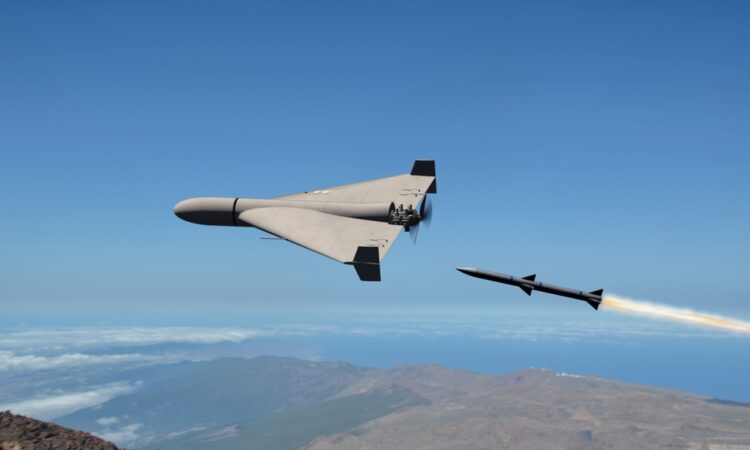
(Image: Shutterstock)