


New planning advice from the UK’s Royal Town Planning Institute (RTPI) considers how drones and their related infrastructure could be integrated into towns across the country.
Two new RTPI practice advice notes, Planning and drones 1: Using drones to deliver planning services and Planning and drones 2: Planning for scaled drone use and infrastructure, highlight the potential benefits of drone technology as it emerges and scales, while cautioning of the importance of forward-thinking planning from the outset.
The UK government said in 2022 that it expects commercial drone programmes to be commonplace by 2030. The RTPI advice, authored by Dr Paul Cureton (Lancaster University) and Dr Anna Jackman (University of Reading), notes that policymakers and the public alike are largely yet to grasp the possible impact drones could have on the built environment.
“Where the technology is appropriate, communities must be involved in meaningful consultation enabling a genuine say in technological deployment and how the technology shapes their neighbourhoods,” RTPI says.
The institute adds that the current lack of robust planning frameworks could also undermine investment in drone infrastructure that would be of public benefit. It cites the case of Manna as an example, which recently withdrew plans for developing delivery hubs in Ireland, citing a lack of national policy framework.
The new practice advice encourages planners to begin proactively considering these issues, as well as the potential public impacts of drones, now – rather than in response to further technological developments.
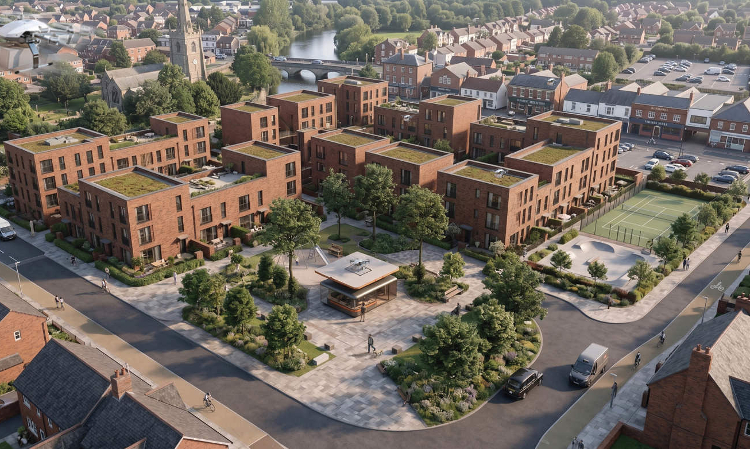
Visualisations, created for the RTPI by the architectural studio ON-A, accompany the guidance and depict potential drone futures, showing how thinking about drones and their infrastructures early may allow it to be carefully and considerately integrated in the everyday spaces and lives of communities. “Together, the guidance and visualisations urge planners, policymakers and communities alike to consider not simply whether drones will become more common, but what a successful, societally and socially beneficial drone future could look like,” RTPI says.
The advice also touches on other advanced air mobility (AAM) operations, such as air taxis, and considers the need for vertiports and landing pads on buildings. The institute says further national policy and guidance will be needed as drone and AAM technology and regulation develop. However, planning authorities can already begin considering now how the infrastructure and operations may affect their areas.
For more information
Image: ON-A visualisation created for RTPI