


The Financial Times (FT) has reported that a number of counter-uncrewed aerial systems platform providers are receiving a marked increase in enquiries from shipowners, as multiple incidents sharpen the focus on this critical area.
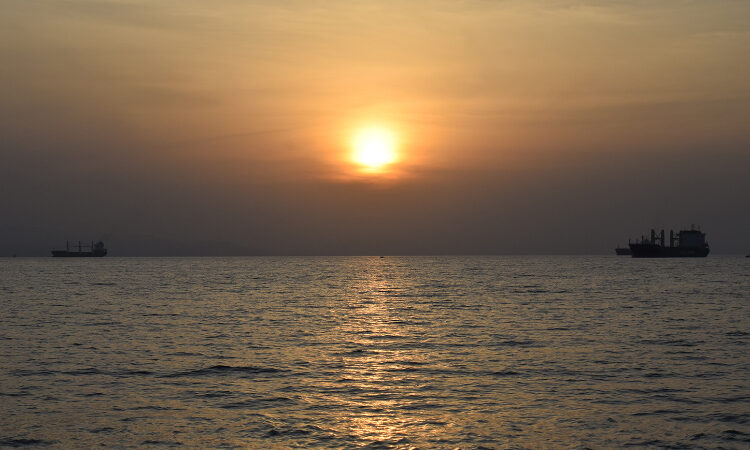
A cargo ship loaded with grain was reportedly struck by a drone this morning (5 October), while travelling in the Black Sea. The Romanian Naval Authority has launched a response to save the crew members. The exact cause of the incident has not been confirmed by authorities.
Meanwhile, UK Maritime Trade Operations (UKMTO) said yesterday (4 October) that four attacks were reported in the Strait of Hormuz from October 1 to 4, all on the Omani side of the waterway, with each vessel being struck by an unknown projectile. UKMTO noted a number of drone overflights and targeted surveillance of merchant vessels.
The International Maritime Organisation earlier reported that more than 20 seafarers have been killed by drone and missile strikes in the Gulf since the start of the conflict in Iran, while a further 30 have been killed in the Black Sea this year.
The drone threat to shipping is not new. The 2021 attack on the MT Mercer Street oil tanker off the coast of Oman was perhaps one of the main precursors to 2026’s uptick, and highlighted the potential effects upon energy transportation.
D-fend Solutions chief marketing officer Jeffrey Starr told the FT that the company is seeing “huge demand” from shipping groups as shipowners, shippers and naval forces face “an asymmetric threat”. And Drone Defence chief executive Richard Gill said interest in C-UAS is growing among oil tanker and liquefied natural gas carrier operators that want to keep serving riskier routes.
The FT article reveals that the cost of chartering a supertanker through the Strait of Hormuz reached an all-time high last week of USD 1.2 million a day for voyages towards China, compared with an average of about USD 79,000 a day in September last year.
Chief growth officer at MARSS, Rob Balloch, told the FT that the company is now seeing a step change in demand from vessels serving offshore oil and gas, because falling integration costs make the investment easier to justify against delays and disruption.
Drone Defence’s Gill said a radar-based package with cameras and jamming equipment costs about USD 500,000 for an oil tanker, while lower-budget operators are turning to rudimentary protections such as nets and suspended water tanks.
Several companies have adapted their C-UAS systems for the marine environment or added brand new products specifically tailored for this market. Considerations are operation on rough seas and resistance to salt water. Providers are also developing, or have already launched, new systems to counter surface or underwater drones. For now, the biggest threat remains aerial drones. Turning off a ship’s automatic identification tracking is no defence against an aerial drone with a camera.
As a first step, maritime organisations should conduct a thorough aerial drone threat and vulnerability assessment to understand which drone threats are relevant for their operations, if they have not already done so. Assessments should consider regions of activity, cargo and vessel type and any geopolitical considerations as well as an awareness of the types of threat actor and drone method, such as explosives/chemical delivery, vessel sabotage and surveillance.
For more information
Image: IMO
The September issue of the 2026 Unmanned Airspace Global Counter-UAS Systems Directory is now available. The guide is the world’s only comprehensive, continually updated directory of global C-UAS companies and systems. It itemises over 1,000 C-UAS products and services with performance details, company sales and partnerships arrangements. It is updated every month and broken down into niche sub-sectors (net-capture, missiles, intercept drones, detectors etc) to give C-UAS procurement and industry personnel a unique perspective of global C-UAS technical capabilities and market positions. It is available in word, PDF and excel formats and Unmanned Airspace readers are eligible for a range of discounts. For more information about the Directory please contact the editor Philip Butterworth-Hayes at philip@unmannedairspace.info.