


The European Commission and the European Aviation Safety Agency (EASA) plan to introduce a “U-space Light” version of the current U-space regulation, with consultations due to start as early as next month. Unmanned Airspace is publishing a series of opinions from senior drone industry, airspace management, legal and regulatory experts to assess whether and how these proposals might impact the pace with which U-space adoption will take place within the European Union. In the first of these, Dr José Ramírez, an expert in, drone regulation and European aerospace law, looks at some the legal implications of the proposals.
On 10 June 2026, at the European Network of U-space Stakeholders Meeting in Luxembourg, the European Commission and EASA announced plans to introduce a “U-space Light” framework designed to accelerate U-space deployment across Europe.
The rationale is clear. Three and a half years after Regulation (EU) 2021/664 entered into force, operational uptake has been remarkably limited. There is only one limited U-space area in the entire European Union. According to Unmanned Airspace reporting from the Luxembourg meeting, only three USSPs and three CISPs have been certified.
Member States have found the implementation process complex, costly, and slow.
The Commission’s response is simplification. Under the new proposals, U-space architecture would be made available in three tiers: “pre-U-space” for rural and suburban operations requiring no regulatory changes; an “intermediate level” requiring amendments to the existing regulation; and “full U-space” for high-density operations.
According to Elina Millere of the European Commission’s DG-MOVE: “The question is no longer whether we can implement U-space. It is how we can accelerate.”
That acceleration is welcome. But it raises a question that deserves serious attention: does simplifying the technical and regulatory architecture of U-space also resolve the governance, liability, and accountability gaps that may ultimately determine whether U-space can scale commercially?
The evidence so far suggests it does not. The fundamental question remains unresolved and the European legislator has yet to address it.
The deployment problem
The limited operational uptake of U-space suggests that regulatory complexity may not be the only barrier to deployment.
Certainly, Member States have struggled with the procedural demands of designating U-space airspace, certifying USSPs, and integrating U-space with existing air traffic management systems. Simplifying those processes is a legitimate and necessary step and one the market urgently needs.
But the near-absence of operational U-space areas after more than three years also reflects deeper structural issues: uncertainty about the commercial viability of USSP business models, the absence of standardised liability frameworks governing the relationships between USSPs, operators, and other ecosystem actors, the lack of evidentiary infrastructure needed to support insurance underwriting and post-incident adjudication, and a persistent absence of legal predictability across the ecosystem.
These are not problems that a lighter regulatory process will resolve. They are governance problems. And they will persist (and potentially intensify) as U-space deployment accelerates under a simplified framework. The European legislator must do its homework before the market does it for them.
Simplification without governance
The U-space Light concept is designed to simplify deployment, reduce certification burdens for USSPs, and accelerate operational approvals for drone operators. Pre-U-space will effectively bring existing UAS traffic management systems (such as those operating in Dublin and the Port of Rotterdam) into the U-space institutional framework without requiring regulatory changes. The intermediate level will streamline the amendment process for more complex operations. And full U-space will remain available for high-density environments.
This tiered approach is pragmatic. But it also creates a new set of governance questions and potentially adds layers of complexity that could make cross-border operations even harder to navigate. Three levels of U-space across 27 national jurisdictions mean that a single cross-border flight could traverse multiple regulatory tiers under different national implementations simultaneously.
In a pre-U-space environment, who bears responsibility if an operator relying on an informal traffic management system is involved in an incident? If no regulatory designation has occurred and no USSP certification is required, what is the liability framework governing the actors involved? What evidentiary standards apply? And what recourse does an injured third party have?
No EU directive or regulation specifically addresses liability allocation in autonomous airspace operations. The Rome II Regulation determines which national law applies, but does not provide substantive rules governing liability in this context. In the absence of a harmonised framework, national courts will inevitably fall back on their own domestic tort law, producing responses that may not always be adapted to the technological and operational realities of autonomous airspace management.
The players are entering the field but the rules of the game have not yet been written.
At the intermediate level, amendments to Regulation 2021/664 will be required. But will those amendments include provisions on liability allocation, evidentiary integrity, and institutional accountability or will they focus exclusively on technical and procedural simplification?
The players need certainty and predictability, not just simpler procedures.
The risk is that simplification accelerates deployment without addressing the structural gaps that made the original framework difficult to operationalise in the first place. More drones in more airspace under lighter regulation does not, by itself, produce a commercially viable ecosystem. It produces a faster version of the same unresolved problem, potentially aggravating the very situation it seeks to resolve.
The liability gap remains open
The current U-space framework contains a significant liability blind spot. Regulation 2021/664 delegates the allocation of liability between USSPs and other actors to private contractual arrangements, without establishing any harmonised European standard for how that liability should be distributed.
Under U-space Light, this gap will not only persist, it may widen.
In a pre-U-space environment operating without formal USSP certification, the contractual frameworks governing liability allocation may be even less structured than under the current regulation. Operators and service providers may default to standard technology-sector terms of service (Service Level Agreements designed to limit the provider’s exposure rather than to allocate responsibility equitably) in an attempt to shield themselves from the legal gaps that regulation has left open.
In an intermediate U-space environment, the question becomes whether the amended regulation will include specific provisions on liability allocation or whether it will, once again, delegate this critical issue to private negotiation where the stronger party will inevitably impose its terms on the weaker, in arrangements that may be legally valid but commercially inequitable.
The Commission has an opportunity, as it develops the U-space Light framework, to address this gap directly. Non-binding guidance on liability allocation between operators, USSPs, CISPs, and manufacturers would provide a common baseline for the contractual arrangements that will inevitably govern these relationships. The alternative (leaving liability allocation entirely to market forces) risks creating the same structural power imbalances and legal fragmentation that have characterised the current framework.
Evidentiary infrastructure is still missing
One of the most significant unresolved challenges in U-space (whether light, intermediate, or full) is the absence of a standardised evidentiary framework for post-incident analysis.
In traditional manned aviation, flight data recorders and cockpit voice recorders provide an established basis for determining causation after an accident. Decades of international standards govern how flight data is captured, stored, and analysed.
U-space has no equivalent.
In a digitally managed airspace where multiple actors exchange data continuously in real time, establishing causation after an incident requires access to complete, reliable, and tamper-proof digital records. Who captured the data? Who stored it? In which of the 27 EU Member State jurisdictions? Who guarantees its integrity against manipulation? And who has the right to access it during litigation?
These questions are not addressed by the current U-space regulation, and there is no indication that U-space Light will address them either.
Without what might be called “digital black boxes” (standardised frameworks for digital flight recording and forensic data preservation) courts will struggle to establish causation. In an ecosystem where multiple systems interact simultaneously, tracing the cause of the cause (causa causae est causa causati) becomes extraordinarily complex.
And without causation, liability allocation becomes guesswork, potentially producing outcomes that are legally defensible but materially unjust, and depriving courts of the factual foundation necessary to render judgments that accurately reflect what actually occurred.
The development of evidentiary infrastructure for U-space should not be treated as a second-phase problem to be solved after deployment. It should be treated as a precondition for deployment, because without it, the insurance products that commercial operators need simply cannot be developed. And without insurance, there is no predictability, no certainty, and ultimately no commercially viable ecosystem. Capital is cautious: it does not flow where legal risk cannot be assessed.
What U-space Light should include
The Commission’s move toward simplification is necessary and overdue. But simplification is not the same as resolution. A lighter regulatory framework that deploys faster but leaves core governance questions unanswered will not produce the commercial ecosystem that Europe’s drone industry needs.
To avoid this outcome, the U-space Light framework should consider incorporating, even at a non-binding level, a minimum governance layer addressing three critical areas.
First, liability allocation principles. Even non-binding guidance establishing common expectations for the distribution of liability between operators, USSPs, CISPs, and manufacturers would significantly reduce legal uncertainty and provide a baseline for the contractual arrangements that Article 15(1)(j) of Regulation 2021/664 already requires: where they avail themselves of services of another service provider, they have the agreements concluded to that effect, specifying the allocation of liability between them;
Second, evidentiary standards. Establishing minimum requirements for digital flight recording, data retention, and forensic data preservation would provide the factual infrastructure that both courts and insurers need to function effectively.
Third, institutional accountability. Defining which actors bear systemic responsibility for maintaining the integrity, reliability, and resilience of the U-space ecosystem (particularly as it increasingly relies on private digital infrastructure) would close the governance gap that currently exists between the technical architecture and the accountability architecture.
Conclusion
U-space Light is the right response to a real problem. The current regulatory framework has proven too complex for rapid deployment, and simplification is a legitimate and necessary step.
But the deployment problem was never purely regulatory. It was also (and perhaps primarily) a governance problem. Accelerating deployment without resolving the governance, liability, and evidentiary gaps that have characterised U-space since its inception risks producing a faster version of the same structural uncertainty.
Everyone is discussing how to simplify U-space. Far fewer are discussing who is liable when it fails.
The technology is nearly ready. The governance infrastructure behind it is not. And as the Commission moves toward consultation on U-space Light later this year, the question the industry should be asking is not only how to deploy faster but whether the legal infrastructure needed to support that deployment is being built at the same pace.
At present, it is not.
Dr José Ramírez is a Spanish aviation and corporate lawyer with 28 years of legal practice and a member of the Madrid Bar Association (ICAM). He holds an MBA from ESADE, a Master in Aviation Management, a PhD in Airport Marketing, and is currently a doctoral researcher in EU aviation competition law. He advises internationally on cross-border aviation matters, drone regulation, and European aerospace law. He can be reached at jose.ramirez@icam.es
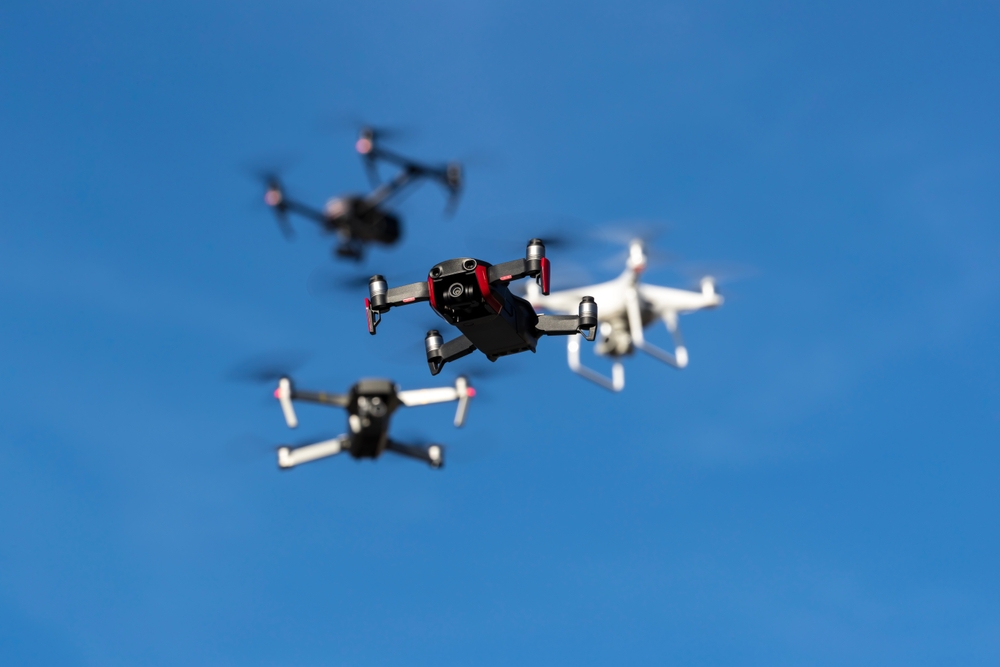
(Image: Shutterstock)