


By Kylie Bielby
The SESAR Joint Undertaking’s CORUS Five project has published the fifth edition of the U-space Concept of Operations (ConOps), providing an updated reference for how drone flights can be organised in increasingly busy airspace.
The ConOps describes the operational environment for U-space, the services and procedures needed to support flights, the roles and responsibilities of the different actors, and the interaction with air traffic services and manned aviation.
CORUS Five notes in the ConOps that the relationship between risk assessment and operational services will be strengthened with the evolution of U-space. Enhanced traffic management capabilities, improved information exchange and higher levels of automation are all expected to provide additional means of managing operational risks and supporting the future integration of uncrewed aviation, innovative air mobility (IAM) and conventional ATM within a common airspace environment.
“U-space levels (U1-U4) described in earlier versions of the U-space ConOps provide a useful shorthand for describing the progressive maturity of the concept, from initial regulatory
implementation and digital services towards advanced operations and full integration with ATM,” the new ConOps executive summary notes. In U5 however, the evolution is explained mainly through three time horizons.
The short-term horizon focuses on supporting the implementation and maturation of the current
U-space regulatory framework. The medium-term horizon addresses the additional capabilities required to support higher-capacity operations, stronger ATM integration and the emergence of IAM operations. The long-term horizon explores the strategic developments necessary to achieve seamless integration of unmanned aviation within the wider ICAO aviation framework.
The ConOps also considers public acceptance and the economic aspects of U-space. On the latter, CORUS Five says that initial deployments are unlikely to generate sufficient demand to recover their full costs and may therefore require external or public funding.
End users should pay for the services they consume, and fees should not create barriers to U-space access or cost more than the operation they support, the ConOps states. In addition, USSP fees may combine a fixed component with a variable component reflecting the 4D volume occupied by the operation. Payment should not be used to obtain higher priority during strategic deconfliction, and U-space and ATM should avoid undue cross-subsidisation. Finally, urgent flights (life saving, state, military) should receive priority, the ConOps states, while access rules and decision-making must remain transparent, simple and consistently enforced.
For more information
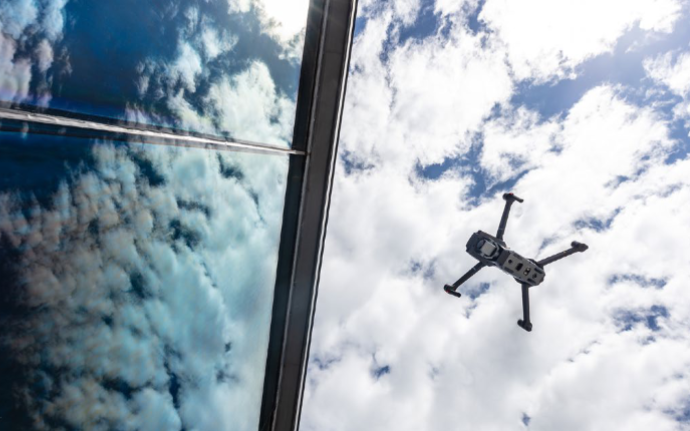
Image: U-space ConOps (SESAR JU)