



The Italian Civil Aviation Authority, ENAC, has published its proposed National Plan for Airports, which, among other measures, aims to initiate a discussion on the opportunities of advanced aerial mobility (AAM) as well as the methods for testing and monitoring AAM technologies’ market entry.
ENAC terms AAM as “aerial systems that are typically electrically powered and predominantly capable of vertical take-off and landing (eVTOL), whether piloted or unpiloted (UAS – Unmanned Aerial Systems, including drones)”.
The plan acknowledges that the major challenge lies in integrating AAM infrastructure into urban environments while also defining requirements regarding environmental impact, visual disruption and noise levels.
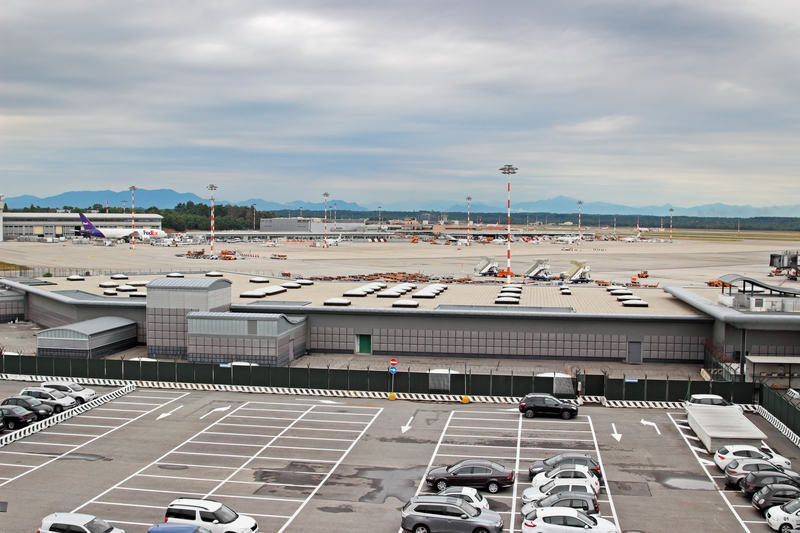
To integrate air mobility at the national level, plans are in place to construct at least six urban vertiports and four airport-based vertiports in Italy. These will be located in Italian cities and at the airports deemed most strategic for AAM development: Milan (two urban vertiports/vertihubs and one airport vertihub), Rome (two urban vertiports/vertipads and one airport vertihub), Turin, Venice (one airport vertihub), Bari and Cortina (vertipads).
To accurately define infrastructure requirements, covering both the creation of new facilities and the upgrading of existing ones, ENAC has planned further in-depth studies that will focus on the integration of mobility plans and traffic demand analysis.
In addition, the plan states that 186 existing facilities will be upgraded to enable their use for AAM operations. This figure was derived from 94 facilities identified in Rome, Milan, Turin, Venice and Bari, supplemented by an average of two facilities per major province within the catchment areas of these five selected cities (covering 46 provinces). These projects will involve 70 percent of facilities undergoing a simple conversion process involving the installation of the systems and the technologies required to host AAM services. The remaining 30 percent will undergo more extensive modifications that also include expansion and the installation of additional takeoff and landing areas.
The plan also includes proposals to expand higher airspace operations. Italy’s Ministry of Infrastructure and Transport has already identified Taranto-Grottaglie Airport as a dedicated facility for this sector’s growth, particularly the development of suborbital flights; access to space through support activities for launching microsatellites from aerial and maritime platforms; and the creation of a technology hub to provide an international experimental laboratory dedicated to new air transport technologies, including AAM.
ENAC says this initiative could be launched with a focus on sustainability, following the review and validation of business plans from companies.
For more information
National Plan for Airports [pdf in Italian]
Image: Milan Malpensa (Shutterstock)