



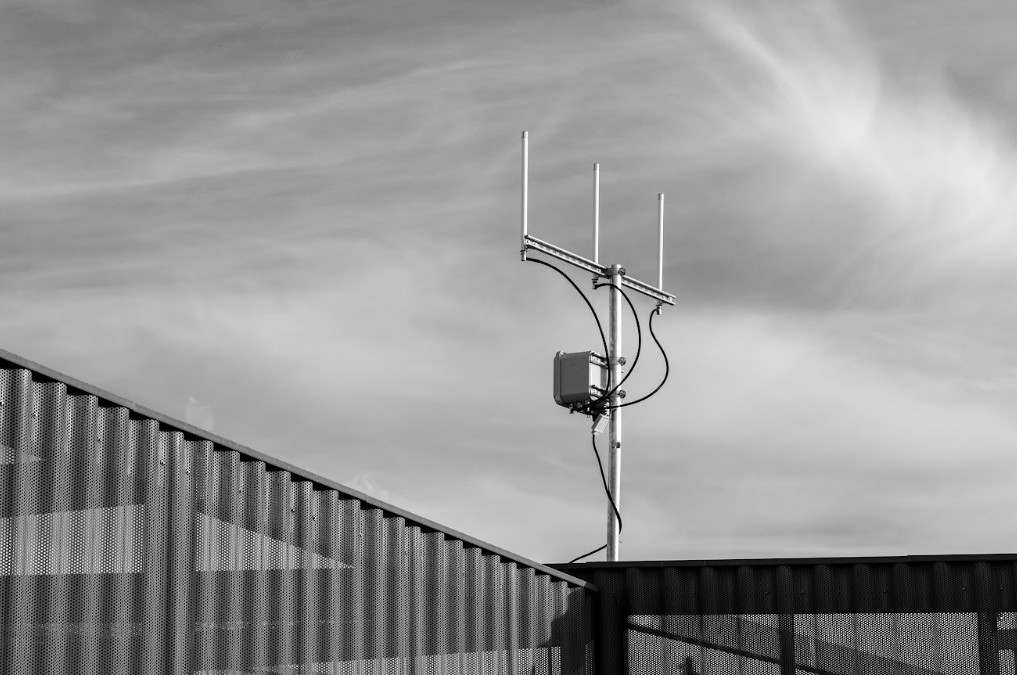
Pierce Aerospace has announced that it has been selected by Metis Technology to deploy Remote ID sensors throughout the Silicon Valley and San Francisco Bay Area. Metis Technology Solutions is the Prime Contractor for NASA’s Aerospace Research Technology and Simulation (ARTS) contract to support safety and research efforts for the Air Traffic Management and Safety (ATMS) project and Aeronautics Projects Office at NASA’s Ames Research Center in California’s Silicon Valley.
NASA’s ATMS project (and broader airspace operations and safety programme) focuses on transforming the National Airspace System (NAS) to safely integrate new technologies such as drones, air taxis, and supersonic transports.
“This multi-year effort will see Pierce Aerospace’s YR1 and YR2S Remote ID Sensors deployed in a layered, networked manner, providing regional coverage to support NASA’s missions for several years.,” said the company in a press release. “Remote ID is the FAA’s requirement that drones broadcast a “digital license plate” that includes a drone’s telemetry, a critical means for the detection, tracking, and identification of uncrewed aircraft. Pierce Aerospace began working on
Remote ID technology in 2017 and began fielding it via the U.S. Air Force’s AFWERX Small Business Innovation Research (SBIR) awards starting in 2018.
According to Aaron Pierce, CEO and co-founder of Pierce Aerospace: “In addition to supporting NASA, this network of sensors can be made available to support airspace awareness for commercial and public sector stakeholders.”
Projects that Pierce Aerospace’s Remote ID sensors and Remote ID data feeds will serve include the Air Traffic Management and Safety (ATMS) programme, the digital “backbone” for the future airspace, focusing on how different types of vehicles (from package drones to commercial jets) can share the sky safely through automation. It will also support the Advanced Air Mobility Pathfinder (AAMP) programme, a combination of Electric Vertical Take Off and Landing (EVTOL) air taxis work, Beyond-Visual-Line-of-Sight (BVLOS) research, and NASA’s Advanced Capabilities for Emergency Response Operations (ACERO) aimed at defining the “rules of the road” for drone delivery, wildfire operations, and public safety operations at low altitudes.
Finally, the installations will support Smart Mobility programmes, such as Small Unmanned Aircraft System flight operations at Moffett Field and elsewhere in support of NASA efforts.
For more information
https://www.pierceaerospace.net/?srsltid=AfmBOopXLp1L_BsXpTSR2Zr6sSUfkrYYk9mY4I7UJBHcNux02ZZT7IeY