


The Royal Netherlands Navy announced that it will equip its existing fleet with new counter-uncrewed aerial systems (C-UAS) in the short term. This was contractually agreed on 24 August by the Ministry of Defence and Destinus.
The project provides for a kinetic C-UAS capability to defeat medium-range air threats. The system consists of a base station and a launch platform from which a drone interceptor can be fired. The C-UAS is being further developed through test tracks. By converting a land-based C-UAS into a variant for operational deployment at sea, Defence is taking a step forward.
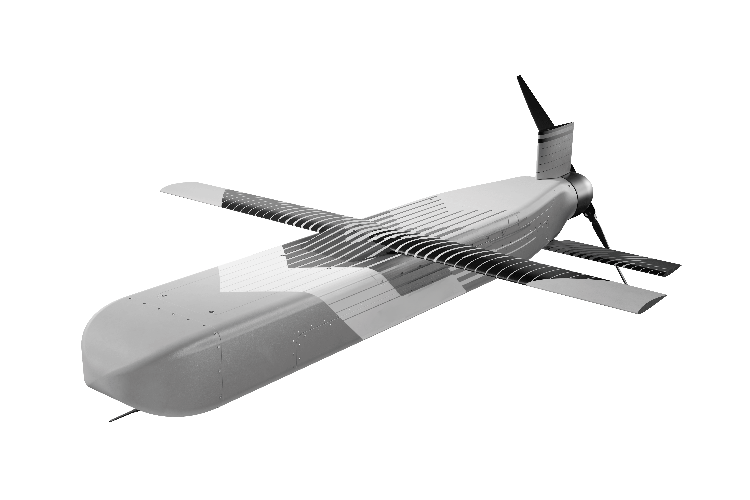
Destinus said in a separate release that it would supply its Hornet B2 system, which is designed to engage one-way attack systems using electro-optical and infrared sensing, supported by AI-based processing during the terminal phase. Engagement decisions remain under human command. Its predecessor, Hornet B1, is in serial production.
For more information
Ministry of Defence – Netherlands
Image: Visual of the new system (Dutch Ministry of Defence/Destinus)
The 2026 Unmanned Airspace Global Counter-UAS Systems Directory is now available. The guide is the world’s only comprehensive, continually updated directory of global C-UAS companies and systems. It itemises over 1,000 C-UAS products and services with performance details, company sales and partnerships arrangements. It is updated every month and broken down into niche sub-sectors (net-capture, missiles, intercept drones, detectors etc) to give C-UAS procurement and industry personnel a unique perspective of global C-UAS technical capabilities and market positions. It is available in word, PDF and excel formats and Unmanned Airspace readers are eligible for a range of discounts. For more information about the Directory please contact the editor Philip Butterworth-Hayes at philip@unmannedairspace.info.