


By Philip Butterworth-Hayes
The UK’s DroneX show has turned into a counter-UAS marketplace for Ukrainian and, surprisingly, Chinese companies.
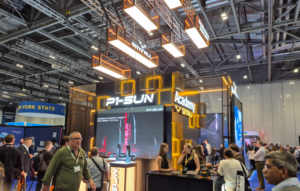
Ukraine’s industry had the biggest and best displays – the hall was dominated by Skyfall (manufacturer of the P-1 Sun interceptor and General Cherry (which makes the Bullet interceptor), both actively exporting to Western nations. According to one Ukrainian industry official, the current life cycle for new battlefield technology developments in Ukraine, including counter-UAS systems, is four months from technology readiness level 6 to industrialisation, seven months of production and six months before obsolescence sets in.
Many front-line Ukrainian units are now suffering from drone system saturation, not just because of the huge numbers and different types now being produced but the time it takes for troops to train on, and support, the new systems coming into operation.

Ukraine is currently building between 500,000 and 800,000 drones a month. In the first nine months of 2026, Ukrainian troops ordered more than 590,000 unmanned aerial vehicles via the government-run Brave1 Market marketplace alone, with interceptors the most commonly ordered.
Another Ukrainian C-UAS supplier with a large stand was TAF Industries, manufacturer of the Octopus-100 interceptor (maximum speed over 300 km/h, a payload of 1.2kg and 15 minutes flight duration), and the Kolibri-i10 (speed of over 200km/h, payload of 0.6 kg and a flight duration of over 20 minutes).
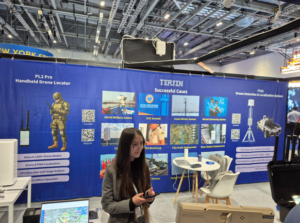
It is unusual to see quite so many Chinese defence and drone companies promoting their products to a western audience, given the supply chain agreements between China and Russia and the highly restricted and legally complex procedures in place for promoting Chinese defence equipment in the UK. While most Chinese exhibitors were at DroneX to promote their battery and component products Terjin Shanghai exhibited its fully integrated RF-based detection, identification, and jamming AI-based low latitude platform while Shengying Technology Co Ltd featured its 7-inch FPV interceptor with AI-assisted guidance, delivering up to 300 km/h and a 300 g payload capacity.
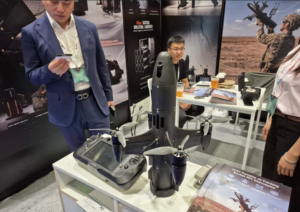
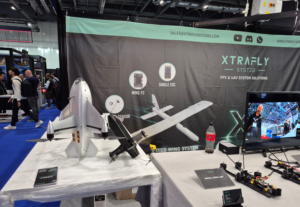
C-UAS interceptors are becoming smaller and faster. Denmark’s XTRAFLY 10-inch VTOL high-speed interceptor has an impressive top speed of 390km/h and an endurance of 35 minutes. The UK’s OMD has built a 5 inch interceptor with a 400 plus km/h speed and an endurance of 10 minutes and a 7 inch version with a speed of 300 km/h and an endurance of 25 minutes.
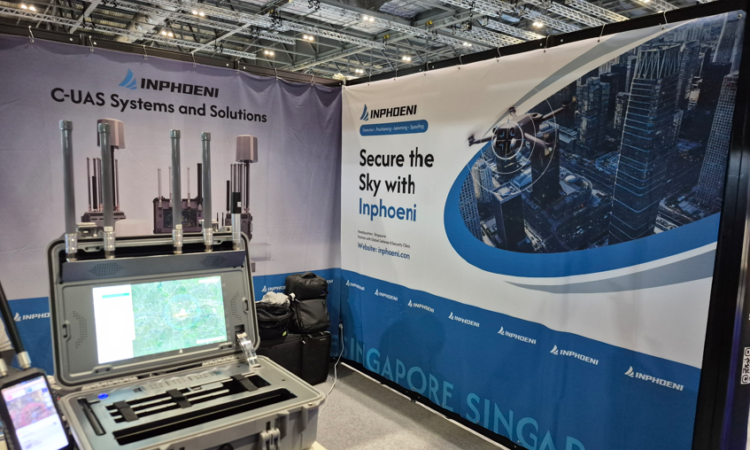
Singapore was also well represented in the C-UAS space. DroneSense and Inphoeni both had large stands to promote fully integrated detect, classify and mitigate C-UAS systems.
The September issue of the 2026 Unmanned Airspace Global Counter-UAS Systems Directory is now available. The guide is the world’s only comprehensive, continually updated directory of global C-UAS companies and systems. It itemises over 1,000 C-UAS products and services with performance details, company sales and partnerships arrangements. It is updated every month and broken down into niche sub-sectors (net-capture, missiles, intercept drones, detectors etc) to give C-UAS procurement and industry personnel a unique perspective of global C-UAS technical capabilities and market positions. It is available in word, PDF and excel formats and Unmanned Airspace readers are eligible for a range of discounts. For more information about the Directory please contact the editor Philip Butterworth-Hayes at philip@unmannedairspace.info.