



Duke University is expanding its partnership with the US Army through a new USD 24 million research centre that will help address the evolving threat posed by uncrewed aerial systems (UAS).
The new Inducing Cyber and Physical Effects in Unmanned Aerial Systems via Cyber-Electromagnetic Convergence (ICE-CEM) centre brings together academia and industry to develop technologies that can detect, disrupt and counter adversarial drones.
Led by Miroslav Pajic, professor of electrical and computer engineering at Duke, ICE-CEM brings together experts in wireless systems, Global Navigation Satellite Systems and navigation warfare, cybersecurity, edge computing, AI and autonomy. The centre includes researchers from Duke, the University of Texas at Austin, Georgia Institute of Technology, University of Michigan, Washington University in St. Louis, Princeton University, Pennsylvania State University and Lockheed Martin.
In addition, Duke University computer engineers have been selected by the US Army Combat Capabilities Development Command Army Research Office to lead the development of low size, weight, power and cost (SWaP-C) systems that can rapidly sense, identify and locate sources of electromagnetic signals in contested environments. The project comes with USD 9 million in funding over the next six years. Northeastern University, Yale University and Raytheon will also collaborate on the project, known as Rapid Analog Processing for Tactical Observation and Opportunistic Radio Spectrum Access or RAPTORS.
For more information
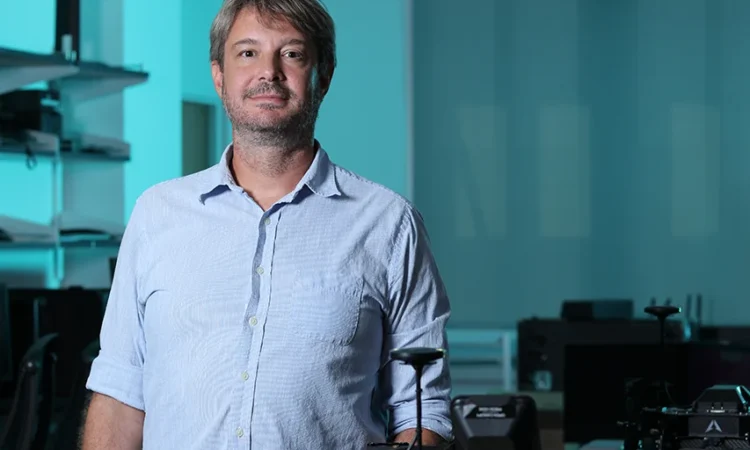
Image: Miroslav Pajic will lead the news centre (Duke University)
The September issue of the 2026 Unmanned Airspace Global Counter-UAS Systems Directory is now available. The guide is the world’s only comprehensive, continually updated directory of global C-UAS companies and systems. It itemises over 1,000 C-UAS products and services with performance details, company sales and partnerships arrangements. It is updated every month and broken down into niche sub-sectors (net-capture, missiles, intercept drones, detectors etc) to give C-UAS procurement and industry personnel a unique perspective of global C-UAS technical capabilities and market positions. It is available in word, PDF and excel formats and Unmanned Airspace readers are eligible for a range of discounts. For more information about the Directory please contact the editor Philip Butterworth-Hayes at philip@unmannedairspace.info.