


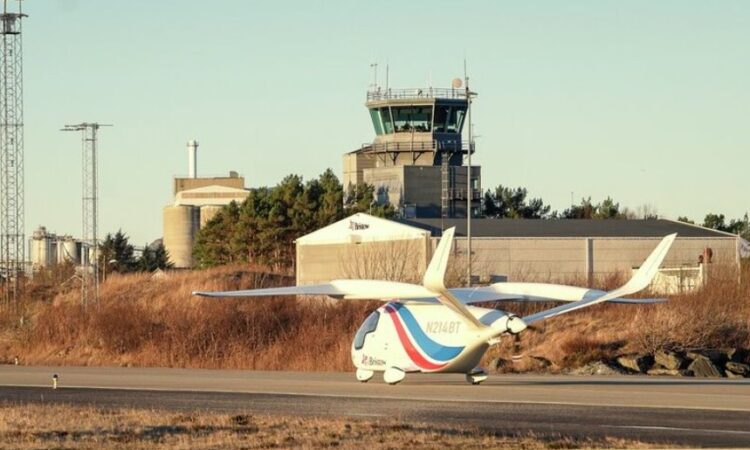
Norway’s air navigation service provider Avinor and its project partners are discussing the next steps of introducing electric aircraft services in the country, following the release of the final report of BETA Technologies and Bristow low-level flight tests. Over six months, 126 flights were carried out and “the tests show that electric aircraft can safely operate side by side with other aviation,” said Avinor in a press release. “Avinor will now consider how electric aircraft can be well integrated into Norwegian airspace.”
“Avinor will be a driving force and facilitator for fossil-free aviation. Prioritising and correctly positioning the new and fossil-free aircraft in the airspace can be one such measure, a bit in the same way that we made room for the electric car in the public transport lane in its time,” said Executive Vice President of Avinor Air Navigation Services, Jan Gunnar Pedersen. “The results open up new opportunities, such as more direct routing, more flexible height shifts and better noise considerations,” he said.
Today’s airspace is largely designed for aircraft with high climbing ability. For battery-electric aircraft, long climbs, fixed altitudes, and detours can result in lower range and less operational flexibility, said the report.
“We have shown that electric aircraft can operate side by side with other aviation without compromising on safety. Now we must facilitate scaling,” said Executive Vice President of Avinor Air Navigation Services, Jan Gunnar Pedersen.
The final report shows that electric aircraft can operate safely and efficiently in Norway. At the same time, the tests point to the need for adaptations in airspace and regulations before the technology can be scaled commercially. Electric aircraft in the near future work best at lower altitudes, with more direct routes in the air. This results in lower energy consumption, easier planning and an increased safety margin.
“If we are to succeed in phasing in electric aircraft in commercial aviation, we must develop procedures and routes that are adapted to this type of aircraft, so-called ‘e-routes’,” says Pedersen.
“Our flights in the international test arena clearly demonstrated that electric aircraft have the capacity to deliver sustainable, cost-effective and efficient air transport services, especially in areas where geographical challenges make access challenging,” said Simon Meakins, Director Advanced Air Mobility, Bristow Group. “However, in order to realise the full potential of these aircraft across the aviation ecosystem, close collaboration is necessary on the development of routes that are adapted to the aircraft’s unique characteristics.”
According to Avinor regulations must also be developed to adapt to electric aircraft. The tests show that today’s requirements for energy reserves and alternative airports can result in operational limitations for aircraft with shorter ranges.
“Electric aircraft have different characteristics than conventional aircraft, and the rules may therefore need to be adapted in line with new technology, as long as safety is ensured through other, equally robust solutions. Our experience provides an important knowledge base for further regulatory work, both nationally and internationally,” said Pedersen.”The tests provide a solid basis for further decisions about airports, airspace and regulations. If electric aviation is to succeed, authorities, operators, manufacturers and infrastructure players must work closely together,” he said.
This article has been partly translated with google translate.
For more information
Vil vurdere egne “e-ruter” for å slippe frem elflyene i luftrommet | Avinor
(Image: Avinor)