

The US Department of Homeland Security and Department of Justice have published an interim final rule RIN 1110-AA39 Counter-UAS Authority for State, Local, Tribal, and Territorial Law Enforcement and Correctional (SLTT) Agencies which allows for local authorities to conduct training and certification of counter-UAS system operations at a more local level.
“This framework governs training and certification (including a two-tiered structure for detection and warning operations and for mitigation operations), authorized technologies, spectrum coordination, airspace approval, real-time air traffic control notification, mitigation reporting, privacy protections, and compliance requirements for SLTT agencies in relation to the exercise of C-UAS authority,” says the introduction of the text.
This interim final rule is effective July 1, 2026.
According to the text:“…As part of the FAA Reauthorization Act of 2018, Congress passed the Preventing Emerging Threats Act of 2018, which authorized the Secretary of Homeland Security and the Attorney General to designate certain facilities or assets as “covered facilities or assets” and take certain measures necessary to mitigate a credible threat that an unmanned aircraft or UAS poses to the safety or security of a covered facility or asset, notwithstanding certain provisions of Federal criminal law, including prohibitions against aircraft piracy, destruction of an aircraft, computer fraud, interference with the operation of a satellite, the Wiretap Act, and the prohibition on pen register and trap and trace device use.
“In testimony before the Senate Judiciary Committee in July 2025, DOJ recommended that all SLTT agencies be authorized to address the continuing threat of UAS (for example, smuggling contraband into prisons, or threatening public safety at sporting events or other outdoor gatherings), again notwithstanding these same Federal criminal laws…In recognition of this continued challenge, Congress passed the SAFER SKIES Act, signed into law by the President on December 18, 2025…Specifically, the SAFER SKIES Act authorizes SLTT agencies to take the mitigation measures to detect, monitor, identify, track, and confiscate UAS, as well as warn the operator of a UAS, including by passive or active, direct or indirect physical, electronic, radio, or electromagnetic means, and through the use of a remote identification broadcast, or by other means.
The FBI is currently using SLTT agencies as federally deputized task force officers in operations to mitigate UAS. The Act says certification procedures to protect the public from drone attacks need not occur at a “national schoolhouse” allowing SLTT agencies to provide these services at a more local level. “The Act directs the Secretary of Homeland Security and the Attorney General, in coordination with the Secretary of Defense, the Secretary of Transportation, and the Administrator of the Federal Aviation Administration (FAA), to develop and publish regulations governing C-UAS authority—that is, the authority to conduct protective measures to detect, identify, monitor, track, and, if necessary, mitigate the threat of UAS—for SLTT agencies under section 124n. This IFR implements this statutory authority, to include compliance requirements and procedures for coordination.”
For more information
https://public-inspection.federalregister.gov/2026-13609.pdf
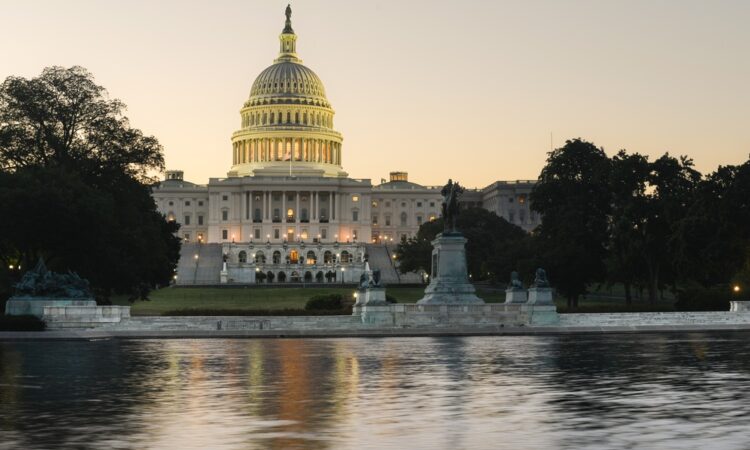
(Image: Shutterstock)
The 2026 Unmanned Airspace Global Counter-UAS Systems Directory is now available. The guide is the world’s only comprehensive, continually updated directory of global C-UAS companies and systems. It itemises over 1,000 C-UAS products and services with performance details, company sales and partnerships arrangements. It is updated every month and broken down into niche sub-sectors (net-capture, missiles, intercept drones, detectors etc) to give C-UAS procurement and industry personnel a unique perspective of global C-UAS technical capabilities and market positions. It is available in word, PDF and excel formats and Unmanned Airspace readers are eligible for a range of discounts. For more information about the Directory please contact the editor Philip Butterworth-Hayes at philip@unmannedairspace.info.