


Ericsson has demonstrated how tactical 5G networks can connect counter-unmanned aircraft systems (C-UAS) and air defence capabilities during Spain’s ATLAS 26 military exercise, enabling wireless data exchange between sensors, radars, command posts and effectors, reducing dependence on fixed infrastructure.
The demonstration took place from 19 to 23 October at the Médano del Loro training area in Huelva. According to Ericsson’s 24 November press release, it was the first time the Spanish Armed Forces had connected counter-drone systems using a tactical 5G network alone, replacing fixed cabling with a mobile communications link.
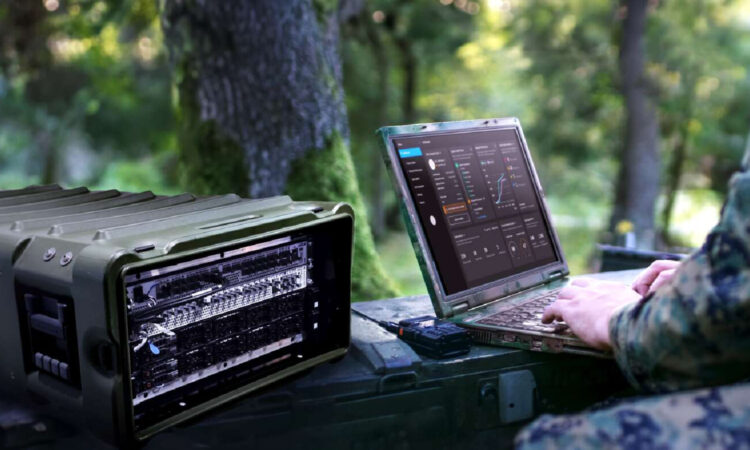
The deployment used Ericsson’s Ultra Compact Core, a 5G core designed for defence applications. For the ATLAS 26 exercise, the company combined 5G core software, a container-as-a-service platform and supporting hardware, and was operated by the 5G Spanish Cyber Defence Centre of the Joint Cyberspace Command.
The network operated on frequencies reserved exclusively for military use, providing connectivity isolated from commercial traffic and designed to reduce exposure to electromagnetic interference and congestion.
The demonstration focused on enabling low-latency data exchange between distributed defence systems, supporting coordination between sensors, command-and-control infrastructure and effectors.
ATLAS 26 was a joint exercise involving the Spanish Armed Forces, Guardia Civil and National Police, focused on responses to unmanned aerial threats and wider air defence scenarios.
For more information