



The NATO Science for Peace and Security (SPS) Programme has convened researchers – along with national representatives and NATO subject-matter experts – to demonstrate security-related applications of uncrewed and autonomous systems, and to chart future cooperation in the field.
At Unmanned Valley, a testing facility for uncrewed systems located in the Netherlands, SPS hosted a series of live demonstrations of its supported research. The demonstrations included two days of expert-level discussions on the SPS research projects that are currently exploring both the applications of uncrewed systems and their specific challenges and vulnerabilities. Sessions focused on decision-making systems, advanced sensing and navigation and the reliability of systems operating in challenging conditions. Participants compared results across their projects, identified shared technical challenges and discussed opportunities for future collaboration.
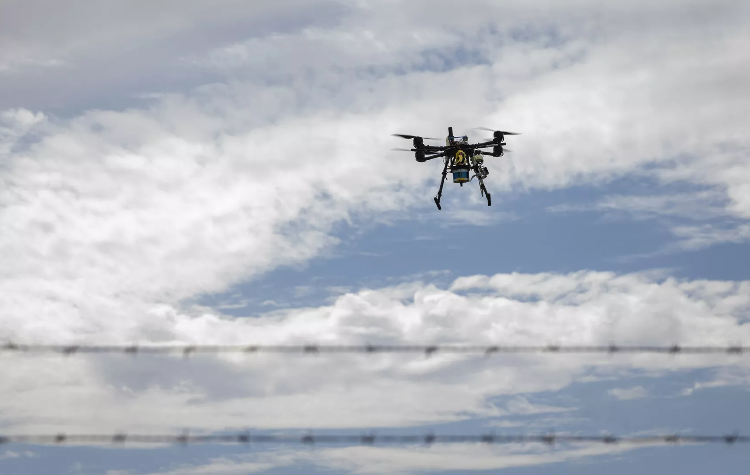
During the same event, SPS also held the third SAPIENCE competition, the final round of a SPS-supported project focused on multi-platform autonomous uncrewed systems. SAPIENCE challenges teams of young researchers to develop uncrewed aerial systems (UAS) able to autonomously perform search and rescue tasks without satellite positioning. On 14 and 15 July, teams from City St George’s, University of London (United Kingdom); the University of Klagenfurt (Austria); the University of Alabama in Huntsville (United States); and host Delft University of Technology (the Netherlands) put their systems through a simulated disaster zone spanning indoor and outdoor settings.
In this competition, the UAS had to cooperate autonomously, communicating and dividing tasks among themselves; sense and avoid obstacles, terrain and one another without human correction; and interpret what they found, identifying survivors and delivering different supplies depending on urgency.
For more information
Image: UAS flight demonstration during the SAPIENCE competition (NATO)