



Why technical compliance may become your strongest evidence of due diligence before a foreign court
By Jose Ramirez, PhD, MBA, Legal Counsel
In the boardroom of any advanced UAS or eVTOL operator, the Specific Operations Risk Assessment (SORA) is typically treated as a purely technical hurdle, a complex engineering checklist required by the European Union Aviation Safety Agency (EASA) to get an aircraft off the ground: just another regulatory box to tick.
This is a critical strategic miscalculation.
For the C-suite, SORA 2.5 is not merely an operational enabler. It is your most defensible evidence of due diligence in a cross-border liability scenario. In the event of a catastrophic failure, your EASA compliance will not only be reviewed by aviation authorities, it will be scrutinised by foreign judges, insurers, and plaintiff lawyers determining whether your operation met the required standard of care under an unfamiliar legal system.
The distinction matters enormously. And most operators are not modelling it.
The nightmare scenario: a borderless sky, a local court
Consider a realistic operational scenario.
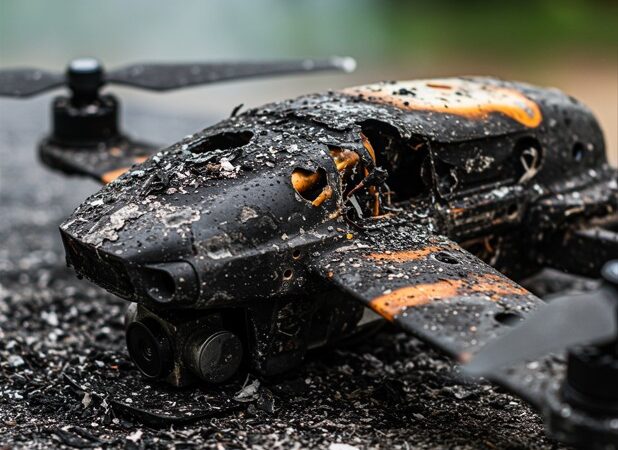
A Munich-based logistics operator deploys a drone manufactured in Switzerland to execute a complex BVLOS (Beyond Visual Line of Sight) delivery route across the Rhine. During the flight, an unforeseen command-and-control (C2) link failure occurs. The aircraft drifts and crashes into a commercial facility in Strasbourg, France, causing significant property damage and operational disruption.
The operator’s immediate instinct is to engage their German legal team and rely on their domestic liability framework.
This is precisely where the exposure begins.
Within hours of the incident, multiple processes begin simultaneously. The aviation authority may investigate the operational aspects of the flight, insurers begin assessing potential coverage, the affected parties seek compensation, and legal advisers from different EU jurisdictions become involved. Although these processes pursue different objectives, they frequently rely on the same operational documentation.
In practice, the SORA prepared before the flight may become one of the first technical documents examined not only by aviation authorities, but also by insurers, loss adjusters and, ultimately, the court. A document originally designed to obtain operational authorisation suddenly becomes central evidence in determining whether foreseeable risks were properly identified, assessed and mitigated.
The hidden trap: Rome II and the portability of legal risk
Cross-border civil liability within the European Union is governed by the Rome II Regulation (EC No 864/2007), a framework that most UAS operators have never read and few have considered in the context of their actual flight corridors.
This creates a structural gap between regulatory compliance and legal exposure, one that only becomes visible when things go wrong.
Under Article 4(1), the applicable law is the law of the country where the damage occurs (lex loci damni), regardless of where the operator is established or licensed, where the flight originated or was planned, where the drone was manufactured, or where the technical and operational decisions were made.
In our scenario, the German operator is immediately subject to French tort law. A Strasbourg court will apply its own procedural rules, including evidentiary standards the operator must meet to mount a credible defence. The consequences are immediate and structural: the applicable standard of care may be assessed under a different legal tradition; the threshold for establishing gross negligence may shift significantly; insurance coverage may be interpreted under a different contractual and procedural framework; and evidentiary burdens may change in ways the operator’s home-country counsel cannot anticipate.
Crossing a border does not change your aircraft. But it can instantly invalidate your legal assumptions.
While certain aspects of civil liability are progressively converging across the EU, procedural law (including rules of evidence, limitation periods, evidentiary burdens, and grounds for appeal) remains largely governed by national law in each Member State. This fragmentation creates a structural layer of legal uncertainty for cross-border UAS operators.
The first line of defence: SORA 2.5 as judicial evidence
The instinctive response to this exposure is to look for a legal solution. But the most effective first line of defence is not legal, it is ex ante.
A technically robust and properly documented SORA 2.5 is, in practice, one of the most powerful pieces of evidence available to demonstrate that an operator acted with the level of diligence required under the applicable legal framework.
This is not a guarantee against liability, because no document is. But in litigation, the onus probandi shifts decisively: the difference between a defensible position and an indefensible one often comes down to documentation quality and methodological rigour. A well-constructed SORA demonstrates, to a court unfamiliar with the operational realities of EASA-based frameworks, that your operation was not reckless, it was structured, assessed, and executed against a recognised international standard, with the diligence expected of a bonus paterfamilias.
That matters. Significantly.
How a high-quality SORA translates into legal defence
A meticulously constructed SORA 2.5 supports a cross-border legal defence in four specific ways.
First, objective proof of foreseeability. A rigorous SORA anticipates, documents, and mitigates risk scenarios through Operational Safety Objectives (OSOs). If an incident arises from a risk that was properly identified and addressed in the SORA it becomes substantially harder for a plaintiff to establish gross negligence (the legal threshold that, in many jurisdictions, triggers personal liability for directors and officers) as the operator can demonstrate having acted diligenter ac prudenter.
Second, the “state of the art” argument. Engaging high-level technical expertise to apply the latest SORA methodology demonstrates that the operator adopted the best available industry standards at the time of the operation. Under many European civil liability frameworks, this shifts the narrative from operator fault to unforeseeable system anomaly, a legally distinct and far more defensible position, which makes it considerably harder to establish culpability and, ultimately, liability.
Third, clear allocation of responsibility. In complex UAS ecosystems, the apportionment of liability between manufacturer and operator is frequently contested and courts may, in certain jurisdictions, apply forms of joint and several liability if that allocation is not clearly established in advance. A precise SORA defines the technical limitations of the aircraft and the operational assumptions under which it was authorised to fly. This clarity is essential to legally isolate responsibility, ensuring that roles, obligations, and exposure are transparent and clearly delimited, so that the operator does not bear financial risks for a manufacturer’s design flaw, and vice versa.
Fourth, the insurance perspective. The legal value of a robust SORA extends beyond the courtroom.
In an increasingly complex UAS ecosystem, insurers increasingly assess both the technical characteristics of an operation and the quality of its governance and risk management. Where responsibility is unclear or operational assumptions are poorly documented, legal uncertainty itself becomes part of the risk being insured and may also have a direct impact on insurance premiums.
A comprehensive SORA provides more than regulatory assurance. It demonstrates that hazards were systematically identified, responsibilities clearly allocated, and mitigation measures proportionate to the operational risks. This can assist insurers in evaluating whether an operator followed recognised industry practice (or acted negligently) when underwriting policies or managing claims.
As cross-border commercial operations become more common, operators capable of demonstrating robust operational governance may also be better positioned during insurance negotiations and claims handling. In that sense, SORA becomes not only a regulatory document, but also part of the operator’s broader risk management and corporate resilience strategy.
What most operators are actually missing
The real risk is not operating without SORA.
The real risk is operating with a formally compliant but legally fragile SORA: one that satisfies regulatory reviewers but would not withstand judicial scrutiny under an unfamiliar legal system.
In a cross-border litigation context, the question is no longer “Was this approved by the competent authority?” It is: “Can this documentation demonstrate, to the satisfaction of a foreign court, that the operator exercised the required standard of care?”
These are not equivalent questions.
A finding of culpa in vigilando (liability arising from inadequate supervision of the operation) requires no proof of direct intent. It requires only that a court determines the operator failed to apply the diligence that a reasonable professional would have exercised. In a foreign jurisdiction, that threshold may be lower than expected, and domestic legal assumptions will not provide protection.
Every operator should be asking three things:
- whether their SORA is defensible under the legal standards of every jurisdiction where damage could plausibly occur;
- whether cross-border liability scenarios have been modelled beyond their home country and primary operating corridor;
- and whether their documentation can meet a court-level burden of proof (not a regulatory one) bearing in mind that in most civil liability frameworks the onus probandi rests with the operator to demonstrate due diligence.
If the answer to any of these is uncertain, the exposure is not technical. It is legal.
The executive takeaway
In the emerging European advanced air mobility ecosystem, regulatory compliance is no longer exclusively the domain of engineers.
SORA 2.5 enables operations. But its real strategic value lies in what it demonstrates in a worst-case scenario: to a judge unfamiliar with the operational realities of EASA-based frameworks, in a jurisdiction where your domestic legal team has no standing.
A technically robust SORA gets you airborne.
A legally defensible SORA (drafted with judicial scrutiny in mind, not just regulatory approval) helps ensure your company remains intact when something goes wrong.
As European UAS and advanced air mobility operations become increasingly international, legal resilience will become a competitive differentiator rather than simply a compliance issue. Investors, insurers, commercial partners and regulators are likely to place growing value on operators that can demonstrate not only technical competence, but also robust governance, transparent risk management and defensible operational decision-making. In that environment, legal preparedness becomes part of operational excellence.
Technical excellence and legal strategy are no longer parallel workstreams, they are two sides of the same indivisible whole.
The question is therefore no longer whether operators should prepare a SORA. The real question is whether they are preparing one capable of standing up not only before a regulator, but before a foreign court.
In cross-border AAM operations, technical excellence without legal strategy may become a liability.
Jose Ramirez, PhD, MBA is a Spanish aviation and corporate lawyer with 28 years of legal practice. He is a member of the Madrid Bar Association (ICAM) and holds an MBA from ESADE, a Master’s Degree in Aviation Management and a PhD in Airport Marketing. He is currently a doctoral researcher in EU aviation competition law and advises internationally on drone regulation, cross-border aviation law, European aerospace regulation and aviation competition law. Contact: jose.ramirez@icam.es
(Image: Shutterstock)