



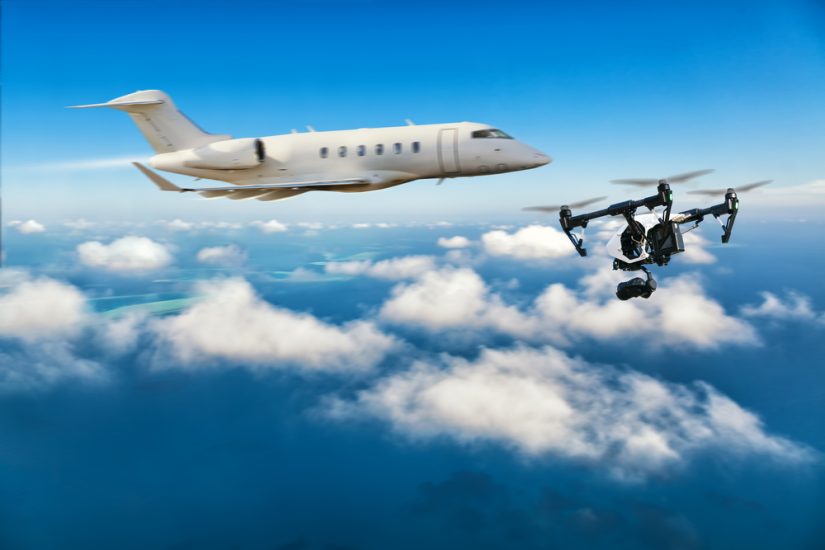
The integration of new entrants, including uncrewed aerial systems (UAS) features in Eurocontrol’s Trajectory 2030 strategy, which sets out a vision of where the agency wants to be in 2030, and what it needs to do to achieve those goals.
Released on January 16, the strategy notes that Eurocontrol will continue supporting the integration of low and very high-altitude operations into the ATM network, including implementing the iNEO (Integration of New Entrants) Network Strategic Project, providing a single-entry interface for research, operational procedures and regulatory developments.
As a result of the iNEO project, Eurocontrol will apply the agreed procedures, carry out the network impact assessments and manage real-time operations, among other activities. The end goal is a full integration of new entrants into the network.
Eurocontrol will continue building a Centre of Excellence for new entrants by running a network of national stakeholders in these domains to address their seamless integration into network airspace.
The organisation will also implement specific actions to support the integration of UAS into the network. The Trajectory 2030 document lists these actions as follows:
- Continue supporting the evolution of the Member States’ and the European Commission policy framework on drones.
- Share U-space lessons learned with stakeholders to accelerate integration into ATM and the deployment of U-space airspace.
- Support Member States in their U-space implementation via different means, including the development of methods and guidelines for Airspace Risk Assessments; the provision of a drone traffic detection system (developed in collaboration with NMD) to Member States to improve traffic situation awareness; the provision of a drone traffic simulator to Member States to assess different traffic evolution scenarios; a workshop with Member State experts or secondments to the Eurocontrol Innovation Hub (EIH) to enable the transfer of knowledge/expertise from EIH experts to Member State experts.
- Contribution to standardisation and regulation requirements (in collaboration with standardisation bodies) to ensure performance-based requirements, and thereby avoiding lock-in effects from the industry.
- Complete the delivery of ongoing SESAR 3 projects on U-space Services U1 and U2, including the delivery of a handbook helping Member States to navigate the requirements and potential approaches (driven by the U-ELCOME project).
- Continue in SESAR 3 Wave 2 (2026-2029) as coordinator/contributor on U-space Services U3 (Advanced Services) projects with a focus on definition and validation for ensuring the right level in terms of added value, maturity and feasibility.
- Develop drone traffic data hub capabilities based on the drone traffic detection system for future innovation projects, and support U-space implementation.
- Develop Uncrewed Traffic Management (UTM)/U-space simulation capabilities in the Simulation Modernisation Programme, to be able to execute end-to-end simulations, and support Member States and SESAR projects in various areas (refinement of concepts of operations, human factors, etc.).
- Continue to support Member States in their U-space implementation, and transfer knowledge/expertise from EIH experts to Member State experts.
- Continue to support EASA and EUSPA on key technical challenges (e.g. e-conspicuity and NAV requirements for UAS).
For more information
Image: Shutterstock