



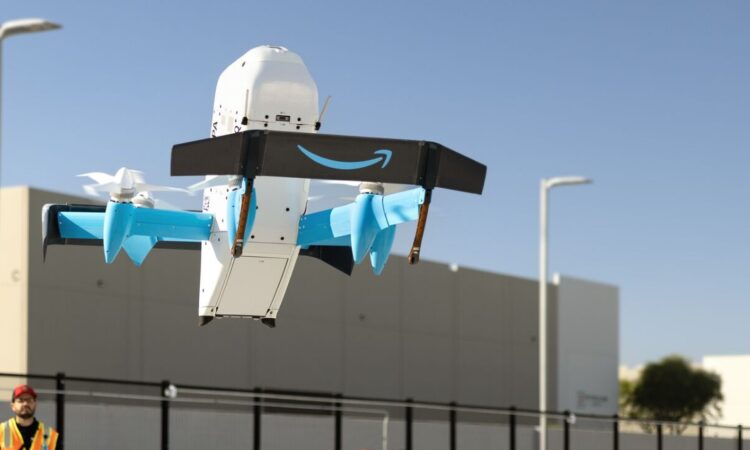
Amazon’s Prime Air is withdrawing from the Commercial Drone Alliance (CDA) as a result of a fundamental disagreement over safety regulations and standards for detect-and-avoid technology. Multiple reports say that Amazon has written to the CDA to express its concerns that some drone operators are pushing for airspace safety standards that are less rigorous than current airspace safety rules and that strict mandates on detect-and-avoid systems for drones to prevent collisions with crewed aircraft are needed.
The CDA set out is position on the US Federal Aviation Administration’s (FAA’s) planned changes to BVLOS operations in its October 2025 paper Comments in Response to “Normalizing Unmanned Aircraft Systems Beyond Visual Line of Sight Operations” [Docket No. FAA-2025-1908]
According to Amazon Air:
“The FAA already recognizes how important DAA capabilities are for safety, especially when it comes to avoiding crewed aircraft that aren’t electronically visible. However, the current proposal only requires these advanced detection systems in limited areas. We believe these safety features should be required in more types of airspace to ensure the highest level of safety for everyone.”
Amazon Air also believes the current FAA proposals for implementing UAS traffic management systems also need to be revised.
“Regarding the FAA’s proposal on UTM, we believe relying too heavily on this system could actually limit drone delivery services without adding meaningful safety benefits….. Although UTM has its place in coordinating drone flights, making it mandatory in all situations could unnecessarily restrict the growth of drone delivery services that benefit American consumers. In other words, we believe that while UTM doesn’t need to be everywhere, it should be used where the most complex drone to drone operating environments are located. It is imperative that the FAA makes sure that a different approach is allowed for the industry to safely operate and expand to meet the growing delivery needs of Americans without offsetting safety benefits. We believe that properly equipped drones with advanced detection capabilities can safely share the skies while allowing these services to grow and serve more communities.”
The CDA has issued a response to the move.
“We are sorry to see Amazon Prime Air leave the Commercial Drone Alliance (CDA),” said Lauren McNamara, Senior Vice President at the alliance. “We have worked collaboratively with them on many issues facing our industry, and we have appreciated their partnership. The CDA is fully committed to the safety of the National Airspace System and integrating drones safely and securely. The drone industry must meet a high bar for safety, and our members do.
“Our CDA members represent all facets of the drone industry – from public safety to agriculture, logistics to inspections, non-profits to tribal governments and everything in between. Our members have conducted millions of safe UAS operations to date, demonstrating that a performance-based framework, rather than prescriptive technology requirements, enable safe operations while fostering competition and innovation. This is reflected in our CDA proposed approach, as outlined in our comments to the FAA’s BVLOS proposed rule, which represents the consensus position of the commercial drone community reached after a collaborative, data-driven 60-day policy review process. We look forward to continuing our work with our CDA membership, government stakeholders, and the broader ecosystem to continue our collective efforts to scale safe commercial drone operations nationwide.”
For more information
https://www.aboutamazon.com/news/policy-news-views/amazon-drone-regulation-comments
(Image: Amazon Prime Air)