



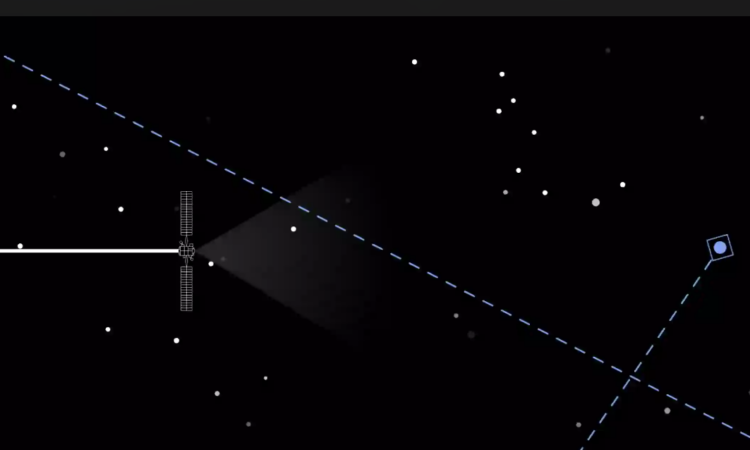
SpaceX has developed a space situational awareness system, called Stargaze, which is designed to improve the safety and sustainability of satellite operations in low Earth orbit (LEO). Stargaze’s screening data will be made available to the broader satellite operator community free of charge in the coming weeks.
The system uses data collected from nearly 30,000 star trackers, each of which makes continuous observations of nearby objects, resulting in approximately 30 million transits detected daily across the fleet. It autonomously detects observations of orbiting objects that are then aggregated to generate accurate orbit estimates and predictions of position and velocity for all detected objects in near real-time. These predictions integrate into a space traffic management platform that identifies potential close approaches between objects in space and generates Conjunction Data Messages (CDMs).
SpaceX will be making Stargaze conjunction data available to all operators, free of charge, via its space-traffic management platform. This platform has been in a “closed beta” with over a dozen participating satellite operators, allowing low-latency ephemeris sharing and conjunction screening. Starting this spring, operators that submit ephemeris (trajectory predictions) to the platform will also receive CDMs against Stargaze data, in addition to ephemeris from other participating operators.
In late 2025, a Starlink satellite encountered a conjunction with a third-party satellite that was performing manoeuvres, but whose operator was not sharing ephemeris. ”Until five hours before the conjunction, the close approach was anticipated to be ~9,000 metres—considered a safe miss-distance with zero probability of collision,” SpaceX explains. ”With just five hours to go, the third-party satellite performed a manoeuvre which changed its trajectory and collapsed the anticipated miss distance to just ~60 metres. Stargaze detected this manoeuvre and published an updated trajectory to the screening platform, generating new CDMs which were immediately distributed to relevant satellites. The Starlink satellite was able to react within an hour of the manoeuvre being detected, planning an avoidance manoeuvre to reduce collision risk back down to zero.”
SpaceX notes that while Stargaze can detect manoeuvres quickly, the most definitive source of satellite trajectories should be provided by operators themselves, enabling deconfliction and minimising collision avoidance manoeuvres. ”Starlink ephemeris is updated and shared publicly every hour, and all other operators should do the same. An appropriate analogy is commercial aviation: there are hundreds of thousands of flights of aircraft daily, but they are able to avoid collisions because they broadcast their location and flight plan to other aircraft. Similarly, spacecraft operators should follow this minimal standard of sharing their predicted trajectory.”
For more information
Image: SpaceX