



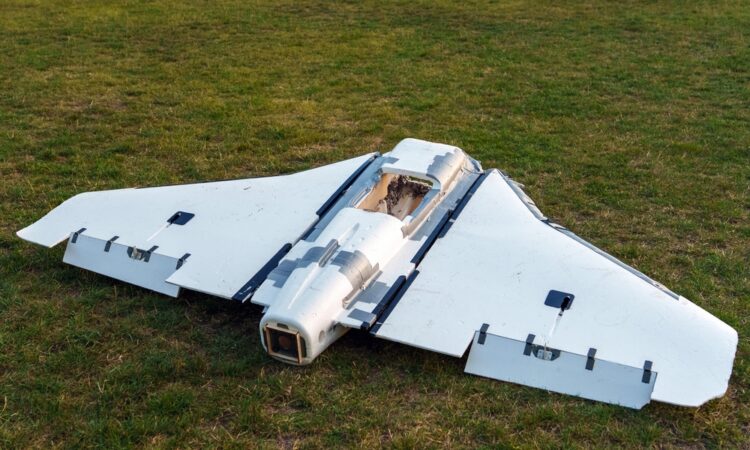
Ukraine’s rate of Russian drones fell to 81% in December 2025, down from 84% in November 2025, according to a new publication Ukraine Air War Monitor published by Foundation Office Ukraine/Konrad Adenauer Foundation.
“In December, 987 drones could not be intercepted (previous month: 844). Interception rates for ballistic missiles and cruise missiles changed little: approximately 25% of ballistic missiles were intercepted, and an average of 85% of cruise missiles,” said the publication. In December, Russia deployed 5,131 drones against Ukrainian cities and civilian targets (6% fewer than in the previous month), as well as 120 cruise missiles and 57 ballistic missiles, according to the publication. For the first time, the use of an Iskander-1000 missile was reported. Medium-range ballistic missiles (IRBMs) of the Oreshnik type are expected to be stationed in Belarus.
The Ukraine Air War Monitor reports:
“In 2025, the Russian army carried out approximately 56,700 air attacks, primarily using long-range drones (96% of all attacks), against civilian targets in Ukraine — more than four times as many as in 2024 (13,300). In 15 nights in 2025, attacks involving more than 500 drones were recorded. Drone defense remained the greatest challenge for the Ukrainian Air Force. The interception rate for long-range drones fell from 98% in February to as low as 80% in October.
Ukraine was able to restrict Russian drone production through targeted strikes on factories and supplier companies. From August 2025 onward, the number of Russian long-range drones deployed declined steadily. China remains the most important supporter of Russia’s drone production.”
For more information
https://www.kas.de/en/web/ukraine/blickpunkt-ukraine/detail/-/content/ukraine-air-war-monitor-vol-xi
(Image: Shutterstock)
The 2026 Unmanned Airspace Global Counter-UAS Systems Directory is now available. The Guide is the world’s only comprehensive, continually updated directory of global C-UAS companies and systems. It itemises over 1,000 C-UAS products and services with performance details, company sales and partnerships arrangements. It is updated every month and broken down into niche sub-sectors (net-capture, missiles, intercept drones, detectors etc) to give C-UAS procurement and industry personnel a unique perspective of global C-UAS technical capabilities and market positions. It is available in word, PDF and excel formats and Unmanned Airspace readers are eligible for a range of discounts. For more information about the Directory please contact the editor Philip Butterworth-Hayes at philip@unmannedairspace.info.