



By Philip Butterworth-Hayes
In the counter-UAS world, this is the age of the intercept drone. New versions are appearing at the rate of one a day, with ranges from 4km to over 200km; Ukrainian versions generally have the most impressive performances and coolest names.
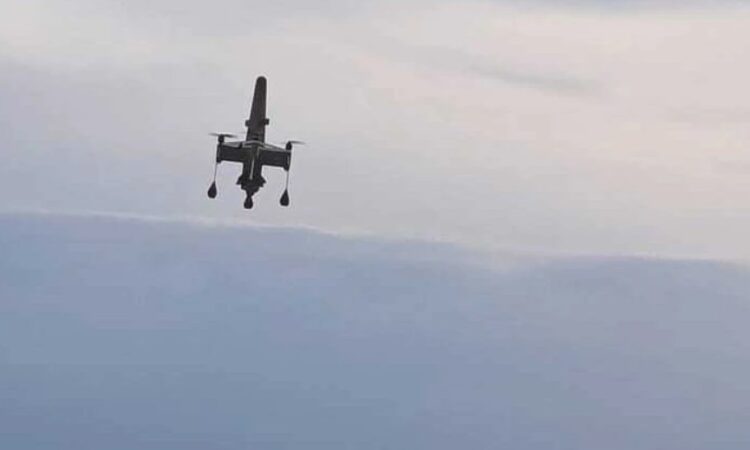
Ukraine’s Defender Media has highlighted the arrival of two new Ukrainian high-speed intercept drones. “The JEDI Shahed Hunter is a vertical take-off drone capable of carrying up to 500g of payload,” said the report. “Its estimated flight range reaches up to 15 km, with an endurance of 12–15 minutes depending on the battery and speed mode. The maximum flight speed with payload exceeds 350 km/h, while the maximum operating altitude is up to 4km. The drone is equipped with both daylight and thermal imaging cameras and operates in conjunction with a ground control station that provides coordination, stable communications and accuracy of use. The system implements automated target detection using real-time radar data, enabling automatic guidance of interceptor drones…..JEDI has already entered serial production, with manufacturing capacity exceeding 1,000 drones per month. In addition to the drone itself, the JEDI aviation system has also completed codification and is available for order on the state marketplace Brave1.”
Earlier, Defender Media reported on the F7 Litavr interceptor, which accelerates to 300 km/h and has an operational radius of up to 36 km. “The UAV’s maximum speed is 300 km/h, with a flight endurance of up to 15 minutes and a warhead weight of 500g,” said the report. “It is equipped with daytime and thermal imaging cameras. The declared tactical range is 36km, and its inertial guidance system operates without GPS….Air targets are engaged through a kinetic strike and/or detonation of the warhead upon impact with the target or on the operator’s command. The platform does not have a relay; target designation is based on Sky Map data. The aircraft delivers its payload to the target under manual guidance. Among the manufacturer’s near-term plans is the official release of a version of the F7 LITAVR equipped with a “last mile” guidance system; factory tests of this variant have already taken place.”
Earlier, Defender Media reported that 1,000 Russian “Molniya” drones were shot down in December 2025 by “General Cherrу AIR” interceptors.
Meanwhile, the Czech Republic’s TRL Drones has launched the TRL X fixed-wing interceptor, featuring an integrated AI guidance suite that can detect and track targets even in electronically degraded environments. “Built with a modular design and a 5.7-foot wingspan, with a 22-pound payload capacity for mission-specific configurations the TRL X can cruise at 280 mph and sprint past 310 mph. It can stay airborne for 45 minutes and has a range beyond 125 miles, with a ceiling of around 14,800 feet…..the TRL X can engage threats ranging from small quadcopters to low-flying manned helicopters using kinetic or non-kinetic effects,” said the company.
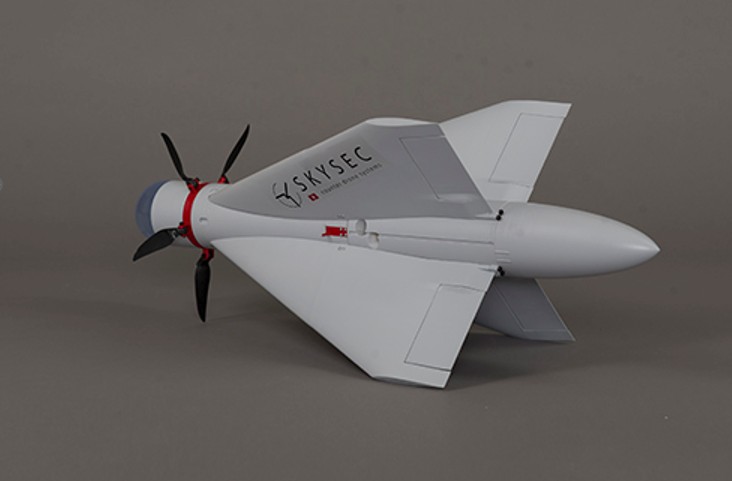
Switzerland’s Skysec recently launched its small, lightweight, short-range Sentinel Catch, powered by an electric motor and capable of speeds up to 230 km/h and a range of up to 5km, according to the company. “With an intelligent seeker head in the nose cone only a rough 3D position of the target has to be provided to the sentinel,” says Skysec. “This can be achieved by a radar, visual-spotter or any other drone detection system which fulfils the minimum precision requirement. The intelligent flight controller not only can intercept moving targets but also fly complex customized flight plans like take-off, cruise, terrain follow, object avoiding, fly to safezone and more. This gives the operator the tools to secure even complex terrain with maximum protection and security.”
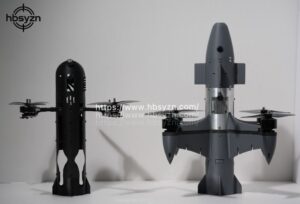
In late January China’s HBSYZN launched its H-07 Ultra-High-Speed Rocket FPV drone interceptor, which can reach 300 km/h, “enabling rapid interception of high-speed aerial targets in critical moments,” says the company. It combines high-speed horizontal flight with the flexibility of a quadcopter drone and has a modular design with a maximum payload of 500 grams. Maximum flight distance is around 6 km, endurance time around 8 minutes, operating altitude 50–2000 m and a 10 m turning radius. The system “supports manual identification of multiple target types, including personnel, vehicles, and UAVs,” says the company.
But which intercept drone has the best performance? Later this month Unmanned Airspace will publish a (free) counter-UAS intercept drone performance comparison guide, looking at range, speed, endurance and payload capabilities of 50 plus intercept drones.
(Image: JEDI Shahed Hunter)
The 2026 Unmanned Airspace Global Counter-UAS Systems Directory is now available. The Guide is the world’s only comprehensive, continually updated directory of global C-UAS companies and systems. It itemises over 1,000 C-UAS products and services with performance details, company sales and partnerships arrangements. It is updated every month and broken down into niche sub-sectors (net-capture, missiles, intercept drones, detectors etc) to give C-UAS procurement and industry personnel a unique perspective of global C-UAS technical capabilities and market positions. It is available in word, PDF and excel formats and Unmanned Airspace readers are eligible for a range of discounts. For more information about the Directory please contact the editor Philip Butterworth-Hayes at philip@unmannedairspace.info.