



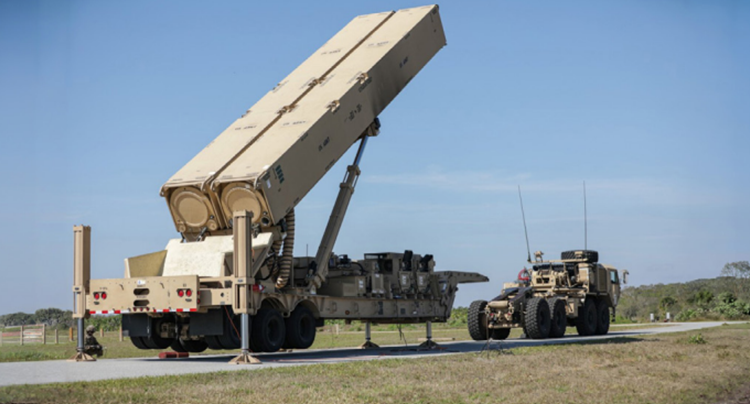
The global air and missile defence environment is entering a period of sustained transformation. Between 2026 and 2030, NATO members and close allies are expected to spend more than US$210 billion on air and missile defence capabilities as states respond to a rapidly evolving threat landscape. This investment reflects more than routine modernisation. It signals a decisive shift toward integrated, layered air defence architectures designed to protect national airspace, populations, critical infrastructure and deployed forces against persistent, multi‑vector airborne threats.
Recent conflicts have fundamentally reshaped defence planning assumptions. Operations in Ukraine, the Middle East and the South Caucasus have demonstrated how modern air attacks combine ballistic missiles, cruise missiles, one‑way attack drones, electronic warfare and cyber effects to overwhelm defenders. These campaigns are designed to be sustained, deliberately exploiting cost asymmetries between cheap attackers and expensive interceptors. As a result, air defence is no longer viewed as a point solution protecting individual assets. Integrated Air and Missile Defence, or IAMD, is now treated as a continuous mission extending across borders, services and domains.
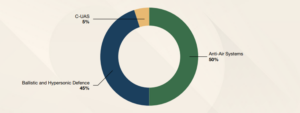
Market trends reflect this shift. Anti‑air platforms remain the largest segment, accounting for roughly half of total spending through 2030. Ground‑based missiles, gun systems and air‑surveillance radars across the very short, short and medium‑range layers form the core of most national architectures. Systems such as NASAMS, IRIS‑T, CAMM‑based solutions, SAMP/T and Patriot are increasingly acquired as part of coherent families of capabilities rather than standalone systems. NATO nations across Europe are rebuilding ground‑based air defence after decades of underinvestment, with a strong emphasis on interoperability, common munitions and shared command and control.
Alongside this, investment in ballistic and hypersonic missile defence is accelerating. Upper‑tier capabilities that were once limited to a small group of states are becoming more widespread, driven by advances in long‑range precision strike and hypersonic weapons. Patriot PAC‑3 MSE, THAAD, Aegis Ballistic Missile Defence and Arrow‑class interceptors are now central to national defence planning in regions ranging from Europe to East Asia, supported by major investment in long‑range sensors and early‑warning infrastructure.
Integration is the defining feature of these next‑generation architectures. Modern IAMD places sensors, data fusion and battle management at the centre of the kill chain. Detecting low‑flying cruise missiles and small drones in cluttered environments, tracking manoeuvring hypersonic threats and managing high target densities all demand resilient, automated command and control. This is driving sustained investment in advanced radars, passive sensing, digital connectivity and decision‑support systems that can dramatically shorten the sensor‑to‑shooter timeline.
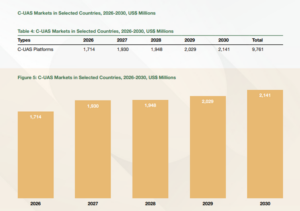
Counter‑UAS capability illustrates how far the air defence mission has expanded. Drones and loitering munitions are now treated as core air defence threats. Spending on counter‑UAS systems continues to grow as nations pursue layered solutions combining detection, electronic warfare, kinetic effectors and emerging directed‑energy technologies under a unified air defence command structure. The objective is clear: defeat mass, low‑cost aerial threats without exhausting high‑end interceptor inventories.
For defence professionals seeking a deeper, data‑driven understanding of these trends, the Full Spectrum Air Defence Market Report 2026–2030 provides granular analysis of spending patterns, national programmes and capability priorities across NATO members and key allies. The report examines anti‑air systems, ballistic and hypersonic missile defence and counter‑UAS markets in detail, offering a clear picture of where investment is flowing and why. It is an essential resource for anyone involved in capability development, procurement, industrial strategy or operational planning within the air and missile defence domain.
These themes will also be explored in depth at Full Spectrum Air Defence Week 2026, taking place in London from 23 to 25 June. As the air defence community marks the twentieth anniversary of this event, senior military leaders, government decision‑makers and industry experts will come together to examine the realities of defending contested airspace. The agenda spans integrated air and missile defence, counter‑UAS operations, hypersonic threats, advanced radar and sensor networks, directed energy, and resilient command and control. More importantly, it provides a forum to connect strategic intent with operational experience and industrial capability.
For organisations operating across the defence, aerospace and airspace security sectors, engaging with both the market report and the event agenda offers a rare opportunity to combine quantitative insight with practical discussion. Together, they provide the context needed to understand the full‑spectrum air defence challenge and to position effectively within a market that is rapidly evolving as airspace becomes more contested, more integrated and more strategically decisive.