



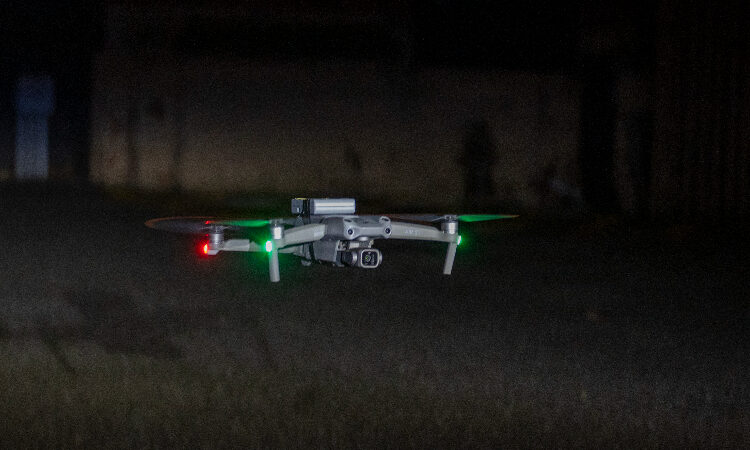
The United States Air Force Office of Special Investigations (AFOSI) yesterday warned drone operators that unauthorised flights near military installations will not be dismissed as harmless mistakes. The notice urges operators to check airspace restrictions before takeoff or risk being arrested and prosecuted.
“This is a serious crime with real consequences,” said Col. David Bethel, commander of AFOSI Reg. 8. “If you are a responsible hobbyist or commercial operator, use the FAA tools, check the airspace and stay away from restricted areas. If you ignore those rules and fly over installations anyway, expect to be investigated and prosecuted.”
Jennifer Coner, a senior intelligence analyst at the AFOSI Center said many incidents involve well-meaning operators who do not realise airspace near military installations is restricted. Coner advised operators to use FAA-approved B4UFLY mobile or desktop tools to help identify restricted areas and to not assume airspace is clear because they are not launching directly over an installation.
“Even when an installation flightline doesn’t appear active from outside the fence line, aircraft operations, training and other mission activity may still be underway,” Coner said. “Using drones responsibly helps protect national security, while ensuring safe recreational flying opportunities for the public.”
While education remains an important part of prevention, officials said unauthorised drone activity will not be dismissed as harmless simply because an operator claims they did not intend harm, adding that the security environment across the homeland has changed.
“The era of assuming a drone near a military installation is just a hobbyist making a mistake is over,” Bethel said. “The threat environment has changed, and AFOSI is treating these incidents seriously.” Bethel added that AFOSI is working with security forces, FBI, FAA, U.S. Attorney’s Offices and other local, state and federal partners to investigate unauthorised drone activity and pursue accountability.
In its notice, AFOSI also encouraged members of the public to report suspicious drone activity to local law enforcement or base security forces immediately and advised them not to attempt to engage, follow or interfere with the drone or its operator.
“Public reporting matters,” Bethel said. “A timely call can help AFOSI and Security Forces locate the operator, identify vehicles, preserve evidence and determine whether laws were broken.”
Details like the drone’s size and color, whether it had lights, and information about anyone operating it or whether there was a nearby vehicle associated with it can assist officers in the investigation.
For more information
Image: U.S. Air Force photo by Hayden Hallman
The latest edition of the 2026 Unmanned Airspace Global Counter-UAS Systems Directory is now available. The Guide is the world’s only comprehensive, continually updated directory of global C-UAS companies and systems. It itemises over 1,000 C-UAS products and services with performance details, company sales and partnerships arrangements. It is updated every month and broken down into niche sub-sectors (net-capture, missiles, intercept drones, detectors etc) to give C-UAS procurement and industry personnel a unique perspective of global C-UAS technical capabilities and market positions. It is available in word, PDF and excel formats and Unmanned Airspace readers are eligible for a range of discounts. For more information about the Directory please contact the editor Philip Butterworth-Hayes at philip@unmannedairspace.info.