


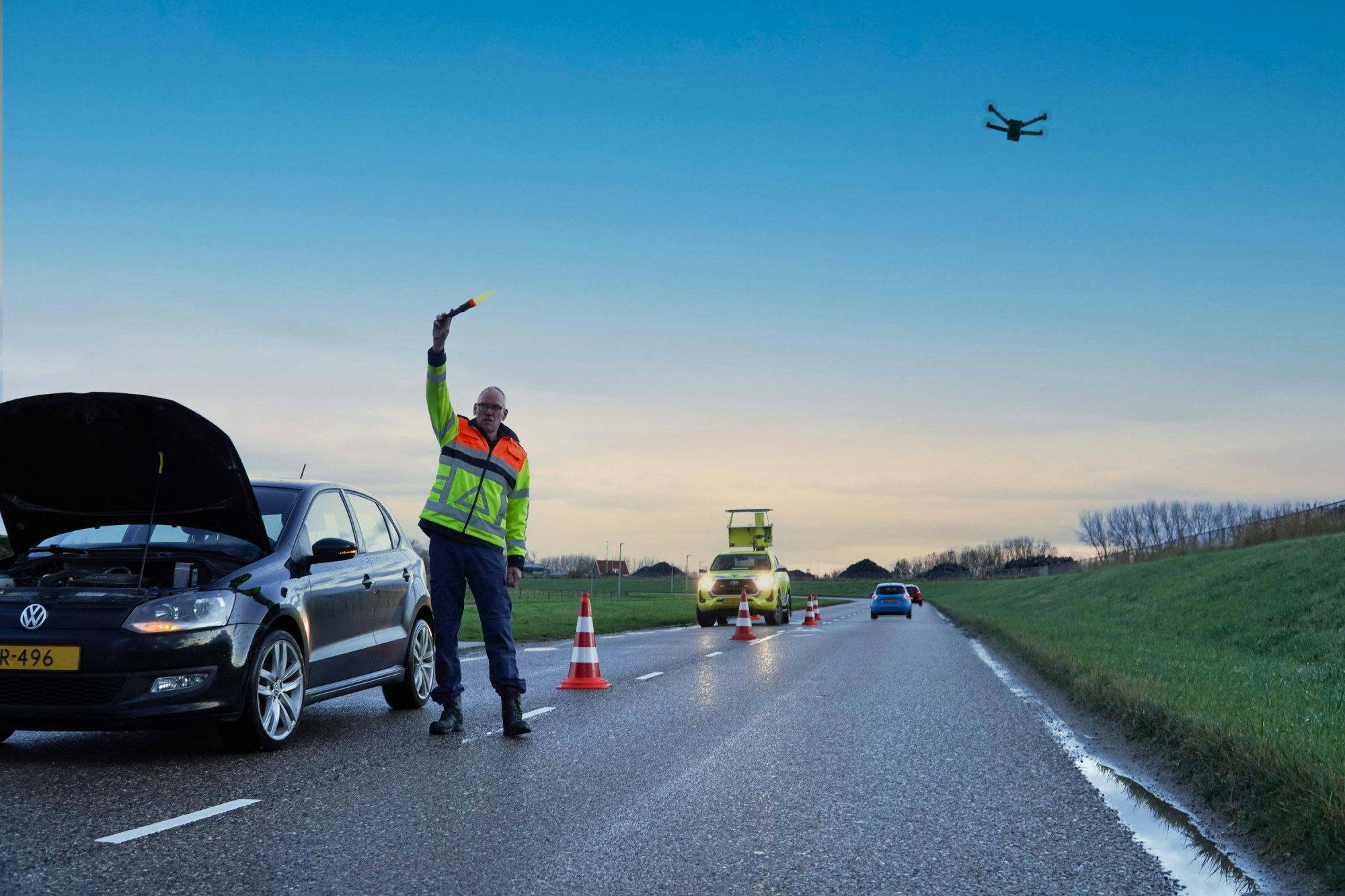
The Netherlands Ministry of Infrastructure and Water Management, Rijkswaterstaat, will examine whether a beyond visual line of sight (BVLOS) drone operations can support incident response.
Over the coming months, the Drone2Go project team will test whether a drone can autonomously fly to the incident location within minutes of its report and transmit live images to the control room or traffic control centre – ideally before emergency services arrive on site. During the flight, certified drone pilots will operate the drone remotely via a computer. Although the drone has a range of 15 km, it will not fly more than 2 km from its base station at Kooysluis during the trial.
An initial trial began in December in Den Helder with simulated incidents. If the trials prove to be successful, the drone will also be used during real incidents within the test area. However, with specific legislation governing the use of remotely operated drones not expected until 2030, large-scale deployment for incident management is not yet feasible. As a result, the drone will not remain in place after the trials end.
“We have long used drones, but current response times range from 1.5 to 2 hours,” Rijkswaterstaat said on February 11. “Remotely operated drones could reduce this to just a few minutes. This would make it possible to identify incidents and disruptions more quickly and respond to them more effectively, ultimately helping to resolve problems faster and more efficiently.”
For more information
Image: Rijkswaterstaat