



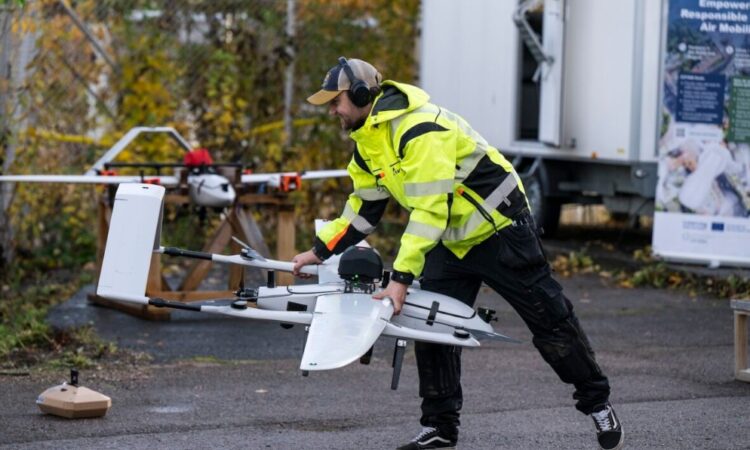
A survey on drones conducted in the fall of 2025 shows that residents have the most positive attitude towards drones that are used in public utility tasks, such as rescue operations, according to a report from Forum Virium Helsiiki. According to the survey, city residents widely trust drones, as long as they are used by the authorities. Almost 70 percent of the 500 respondents trusted the city as a user of drones at least quite a lot.
“The survey results provide cities with vital information about residents’ attitudes and expectations. The results must be taken into account when creating rules and planning the use of city airspace,” says Renske Martijnse-Hartikka , project manager for the CITYAM project at Forum Virium Helsinki.
The surveys conducted in 2024–2025 are part of the CITYAM project, funded by the European Union. The project has studied the attitudes of city dwellers in six European cities: Helsinki, Hamburg, Stockholm, Gdansk, Riga and Tartu. The survey conducted in 2023 was part of the Airmour project, which focuses on urban aviation.
In the autumn 2025 survey, emergency flights to support rescue operations received the highest approval from residents: 64% of respondents considered them “very acceptable”. According to previous surveys, as many as 91% of Helsinki residents would welcome a drone near their home in an emergency. Environmental monitoring also received a strong 53% support.
Strong support for government drones clearly differs from commercial or private use, which residents are much more cautious about, said the report. Helsinki residents are most concerned about possible illegal activity. This concerns at least some of around 48 percent. Other concerns relate to privacy violations and data misuse. Respondents are also suspicious of the impact of drones on other species. In the autumn, around 30 percent expressed concerns about animal welfare. The same topics have been at the top of the list in all three years.
“Drones are interesting, but the concerns and images of warfare associated with them are quite strong. Cities should take this into account when planning the introduction of drones for new tasks,” says Martijnse-Hartikka.
In the fall of 2025, a survey and interview study were conducted. Of the 350 respondents, just over ten percent spoke specifically about concerns related to drones. Five percent of those interviewed directly linked drones to war. Residents emphasize the importance of clear regulations and open communication to ensure the responsible use of drones in the city. The latest results also show that residents want more precise definitions of where drones can land.
Helsinki residents have a clear view of where drones are allowed to fly: industrial areas and the roofs of commercial buildings are the most popular take-off and landing locations. On the other hand, street areas, such as bus stops and sidewalks, are considered unsuitable. Drone operations should be kept away from densely populated pedestrian areas to minimize disruption. The Helsinki results are in line with a broader European trend. In the six CITYAM cities, a total of over 5,000 people responded to the surveys. The trend was clear: rescue and medical use were the most accepted uses everywhere.
A direct correlation between knowledge and trust was observed in all cities. The more residents knew about drones, the more positive they were towards them. Between 2023 and 2025, awareness of drones has increased slightly in all cities.
(Image: Forum Virium Helsinki)
For more information
Selvitys: drooni kelpaa pelastustehtäviin, vapaa käyttö arveluttaa