



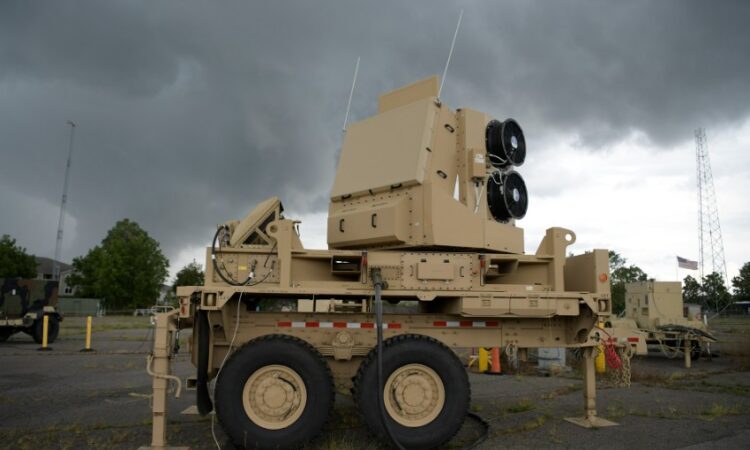
Lockheed Martin has delivered the first Sentinel A4 radar from Low-Rate Initial Production (LRIP) 2 to the U.S. Army and completed the first phase of Initial Operational Test and Evaluation, accelerating the programme closer to full-rate production.
“This delivery is a major milestone in getting next-generation radar capability to the warfighter to address the threats of today and tomorrow,” said Rick Cordaro, vice president of Lockheed Martin’s Radar and Sensor Systems. “Sentinel A4 expands battlespace awareness and improves layered defence against cruise missiles, unmanned aerial systems and rotary- and fixed-wing threats in complex environments.”
The delivery of the first of 19 LRIP 2 systems builds on Lockheed Martin’s previous delivery of Sentinel A4 radars, said the company in a press release. During IOT&E Phase I, Sentinel A4 integrated with Forward Area Air Defense Command and Control (FAAD-C2), validating the effectiveness of its open-architecture design and interoperability across multiple command-and-control networks. Sentinel A4 will replace the currently fielded Sentinel A3 radar with a modern, 360-degree Active Electronically Scanned Array (AESA) sensor built to counter threats such as cruise missiles, unmanned aircraft systems, helicopters, planes, rockets, artillery and mortars.
Lockheed Martin will continue to deliver Sentinel A4 systems, directly supporting the U.S. Army’s fielding plans and operational testing. These fielded systems will help refine tactics, validate performance in real-world settings and ensure the radar is ready to meet operational demands.
For more information
https://news.lockheedmartin.com/2026-02-02-Lockheed-Martin-Delivers-First-Sentinel-A4-from-LRIP-2-Advances-Toward-Full-Rate-Production
(Image: Sentinel A4 – Lockheed Martin)
The 2026 Unmanned Airspace Global Counter-UAS Systems Directory is now available. The Guide is the world’s only comprehensive, continually updated directory of global C-UAS companies and systems. It itemises over 1,000 C-UAS products and services with performance details, company sales and partnerships arrangements. It is updated every month and broken down into niche sub-sectors (net-capture, missiles, intercept drones, detectors etc) to give C-UAS procurement and industry personnel a unique perspective of global C-UAS technical capabilities and market positions. It is available in word, PDF and excel formats and Unmanned Airspace readers are eligible for a range of discounts. For more information about the Directory please contact the editor Philip Butterworth-Hayes at philip@unmannedairspace.info.