


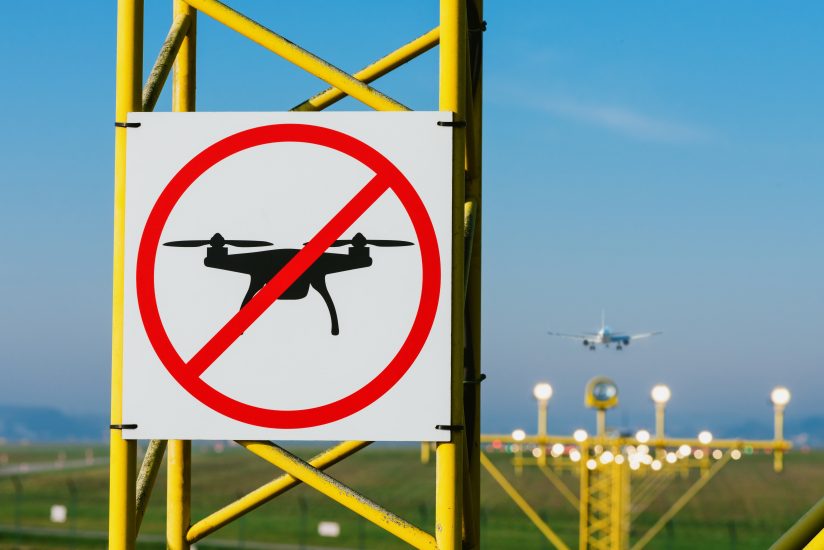
A hearing at the Interior Committee on January 26 gathered stakeholders to discuss the German government’s planned amendment to the Aviation Security Act, which includes a proposal for German Armed Forces (Bundeswehr) assistance for drone defence.
Among other measures, the draft law stipulates that Germany’s federal states can request assistance from the Bundeswehr for drone defence. Under current law, deciding on the deployment of the armed forces as administrative assistance to prevent a regional disaster requires a corresponding agreement between Germany’s Minister of Defence and the Federal Minister of the Interior. In the future, according to the proposals, the Ministry of Defence alone would be able to decide on requests for administrative assistance. The requirement for consultation with the Federal Ministry of the Interior would be eliminated.
Chief Warrant Officer Heiko Stotz of the German Armed Forces Association welcomed the planned expansion of the Bundeswehr’s operational capabilities against drones within the framework of administrative assistance. He also considered the transfer of operational decision-making authority from the Minister to the Ministry to be a positive step. This would streamline the chain of command, as operational decisions could be delegated, Stotz stated. He emphasised that, even with this new regulation, Bundeswehr support within the framework of administrative assistance would remain the exception, not the rule. Federal and state police authorities remain responsible for domestic security. He added that cooperation and communication between security authorities must function smoothly in practice.
Ralph Beisel, CEO of the German Airports Association (ADV), was also supportive of the draft legislation. He stated that any regulation enabling effective measures for the detection and defence against drones strengthens resilience against disruptions caused by drone flights. “This includes, within a defined framework and in compliance with constitutional requirements, the deployment of the Bundeswehr as a last resort – even at airports.”
Dr. Gerald Wissel, Chairman of UAV DACH said commercial drones should not automatically be placed under general suspicion. “To truly achieve security for vulnerable infrastructure, a comprehensive solution is needed”, Wissel stated. “For this, a unified, real-time air situation picture in the lower airspace is essential. Without immediate visibility and a clear distinction between legal, illegal, and potentially dangerous operations, any response chain remains inadequate. At the same time, a clear regulation of responsibilities is needed for the Federal Ministry of the Interior, the Federal Police, and the state agencies and authorities.” Wissel added that the planned reform would not resolve the jurisdictional chaos.
Meanwhile, Arnd Krummen of the German Police Union sees “the wrong course being set regarding drone defence.” At the hearing, he said that the deployment of the Bundeswehr should be possible even “in situations that are clearly police-related.” He considers the elimination of the requirement to consult with the Federal Ministry of the Interior to be problematic, saying that this effectively lowers the constitutionally high threshold for the Bundeswehr’s domestic deployment. The GdP representative believes that legislators must consider whether the existing constitutional framework should be further developed. He said such a reform could clearly stipulate that the armed forces can be called upon to support efforts to avert significant threats posed by drone overflights “without weakening the constitutionally mandated separation between police and military.”
For more information
Image: Shutterstock
The 2026 Unmanned Airspace Global Counter-UAS Systems Directory is now available. The Guide is the world’s only comprehensive, continually updated directory of global C-UAS companies and systems. It itemises over 1,000 C-UAS products and services with performance details, company sales and partnerships arrangements. It is updated every month and broken down into niche sub-sectors (net-capture, missiles, intercept drones, detectors etc) to give C-UAS procurement and industry personnel a unique perspective of global C-UAS technical capabilities and market positions. It is available in word, PDF and excel formats and Unmanned Airspace readers are eligible for a range of discounts. For more information about the Directory please contact the editor Philip Butterworth-Hayes at philip@unmannedairspace.info.