


The German Aerospace Center (DLR) and skyzr GmbH, a subsidiary of Frequentis AG have developed an experimental U-space area to test advanced procedures for safe UAS integration.
“The aim of this collaboration is to create an interoperable, practical, and scientifically sound environment in which future operational procedures for unmanned aircraft systems can be realistically tested and further developed,” say the companies in a press release.
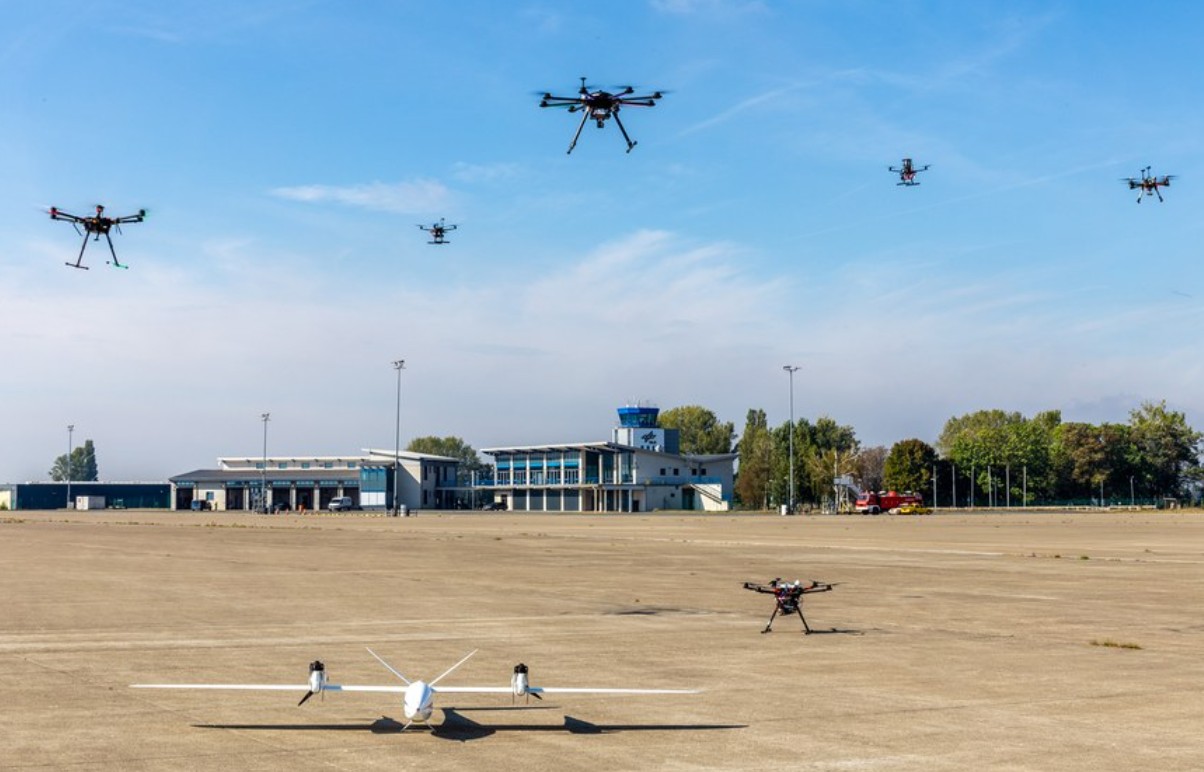
The U-Space area is being developed at the DLR’s National Test Center for Unmanned Aircraft Systems in Cochstedt.
“Here, the services are not only used in research projects but are also tested in various practical application scenarios,” say the two organisations. “This creates a realistic environment in which new technologies and operating procedures can be tested under real-world conditions. In the long term, the emerging U-Space will also offer external partners the opportunity to test their applications on-site.”
The U-Space area will initially operate in the Aerodrome Traffic Zone (ATZ) of Cochstedt. The DLR’s National Test Center, with its infrastructure, offers ideal conditions for research, testing, and demonstration of drone technologies.
“This is a crucial step towards establishing U-Space in Germany and thus safely testing the integration of unmanned systems into airspace alongside manned air traffic,” says Dr. Dagi Geister, Head of the Unmanned Aircraft Systems Department at the DLR Institute of Flight Guidance
The modular architecture of U-Space allows for the integration of additional optional services that can be tested within the framework of research projects. Simultaneously, a flexible and open infrastructure is being created, enabling new research concepts for U-Space and Innovative Air Mobility (IAM) – that is, the networked integration of manned and unmanned aircraft in the same airspace. This includes approaches for integrating multiple U-Space service providers (Multi-USSP), the integration of vertiports (take-off and landing sites for air taxis and cargo drones), and coordination with manned air traffic. Operation remains completely independent of external networks and services, say the companies.
For more information
https://www.dlr.de/de/aktuelles/nachrichten/2025/dlr-und-frequentis-schaffen-fortschrittlichen-luftraum-fuer-drohnen